

 8613480627251
Industrial wastewater often contains high concentrations of recalcitrant organic pollutants—compounds such as aromatic rings, heterocycles, and halogenated organics, frequently found in effluents from the pharmaceutical, textile, and chemical industries. These pollutants typically possess highly stable molecular structures, rendering them resistant to direct microbial degradation. Even after conventional biochemical treatment, such wastewater may still exhibit issues like elevated chemical oxygen demand (COD), residual color, and the incomplete removal of persistent organic compounds.
As industrial wastewater discharge standards become increasingly stringent, standalone biochemical treatment processes are often insufficient to meet the advanced treatment requirements of many enterprises. Electrochemical advanced oxidation processes (EAOPs) leverage oxidation reactions occurring at electrode surfaces to generate highly reactive oxidizing species, which can effectively target recalcitrant organic pollutants. In these systems, titanium anodes serve as critical core components, directly influencing reaction efficiency, oxidation pathways, and the operational stability of the equipment.
I. Hydroxyl Radical Oxidation: Facilitating the Deep Degradation of Recalcitrant Organic Pollutants
A primary feature of electrochemical advanced oxidation is the *in situ* generation of highly reactive oxidizing species via electrochemical reactions. Among these, the hydroxyl radical (·OH) stands out as a particularly potent oxidizing agent.
Under specific electrode materials and operating conditions, water molecules can undergo oxidation at the anode surface, forming adsorbed hydroxyl radicals or other reactive oxygen species. These species attack the aromatic rings, carbon-carbon double bonds, and various heteroatom-containing functional groups within organic pollutants, effectively dismantling their original molecular structures.
For instance, in the case of phenolic compounds, azo dyes, pharmaceutical intermediates, and certain halogenated organics, the oxidation process typically begins by disrupting conjugated structures and characteristic functional groups. This causes large, complex molecules to break down into ring-opened products and small-molecule organic acids. With sustained oxidation under optimal conditions, these intermediates can be further converted into carbon dioxide, water, and inorganic ions—achieving a higher degree of mineralization.
Compared to many traditional oxidation methods, electrochemical advanced oxidation is driven by electric current and can operate under conditions close to ambient temperature and pressure, thereby reducing the reliance on external chemical oxidizing agents. It should be noted that the generation efficiency of hydroxyl radicals is closely related to the properties of the electrode coating. Different titanium anodes exhibit distinct surface oxidation characteristics; not all noble metal oxide coatings are suitable for advanced oxidation processes (AOPs) that rely primarily on hydroxyl radicals. The actual chemical oxygen demand (COD) removal rate and the degree of mineralization also depend on factors such as the type of pollutants, initial concentrations, pH value, current density, electrolysis duration, and mass transfer conditions.
II. Electrode Material Design: Balancing Catalytic Performance with Long-term Operational Stability
Titanium anodes used in electrolytic water treatment typically consist of a titanium substrate and a functional surface coating. The substrate is generally made of commercially pure titanium (Grade 1 or Grade 2), which offers excellent corrosion resistance and machinability, making it suitable for fabricating various electrode structures, including plates, meshes, expanded meshes, and tubes.
During the manufacturing process, the titanium substrate undergoes pretreatments—such as sandblasting and acid etching—to improve its surface condition and enhance the adhesion between the substrate and the coating. Subsequently, a functional layer with electrocatalytic activity is formed on the titanium surface through processes such as coating application and thermal decomposition.
Common coating systems include mixed metal oxides (MMO) based on noble metals like ruthenium and iridium, as well as other composite oxide materials. Since different coatings perform differently in chlorine evolution, oxygen evolution, and the oxidation of organic matter, the choice of coating must be based on the specific composition of the wastewater and the targeted reaction pathway.
For advanced oxidation processes, electrode design focuses primarily on the following aspects:
1. Catalytic Activity: Selecting an appropriate coating system based on the target pollutants and the intended oxidation mechanism to enhance the efficiency of the desired oxidative reactions.
2. Control of Side Reactions: Carefully selecting electrode materials and operating potentials to minimize unwanted oxygen evolution or other competing reactions.
3. Coating Adhesion Strength: Optimizing substrate pretreatment and coating preparation processes to reduce the risk of coating delamination during long-term operation.
4. Resistance to Fouling: Optimizing electrode structure and maintenance protocols—taking into account the organic matter, inorganic salts, and suspended solids present in the wastewater—to mitigate surface scaling and the coverage of active sites. The operating temperature, current density, and service life of an electrode cannot be determined solely by its substrate or coating type; they must be verified based on specific product specifications, the nature of the wastewater, and actual operating conditions.
III. Advanced Treatment and Pretreatment: Expanding the Engineering Value of Electrochemical Technologies
The application of electrochemical advanced oxidation processes (EAOPs) in industrial wastewater treatment extends beyond advanced oxidation following biochemical treatment; these processes can also serve as a pretreatment stage prior to biochemical treatment.
As an advanced treatment process:
For wastewater that still contains recalcitrant organic matter after biochemical treatment, electrochemical oxidation can be employed to further break down the structures of certain organic pollutants, reducing residual chemical oxygen demand (COD) and color. This prepares the effluent for subsequent stages such as filtration, adsorption, or other advanced treatment processes.
As a pretreatment process:
For industrial wastewater containing substances that are biologically toxic or recalcitrant, electrochemical oxidation can be used to alter the molecular structure of certain pollutants, thereby enhancing the biodegradability of the wastewater before it enters downstream biochemical treatment systems.
This flexible configuration—applicable either upstream or downstream—allows electrochemical advanced oxidation to complement traditional biochemical treatment, enabling facilities to optimize their overall treatment processes based on influent characteristics and discharge requirements.
It should be noted, however, that electrochemical oxidation does not guarantee the complete mineralization of all organic matter in a single pass. Some pollutants may be converted into intermediate byproducts; therefore, in engineering applications, it is essential to monitor changes in COD, the removal efficiency of target pollutants, and the risks posed by byproducts—conducting toxicity assessments when necessary.
IV. Dimensional Stability of Titanium Anodes: Ensuring the Continuous Operation of Electrolytic Systems
Unlike certain soluble or consumable electrodes, titanium anodes utilize a titanium metal substrate, with the surface coated in noble metal oxides to provide electrocatalytic activity. Under standard operating conditions, the titanium substrate maintains excellent structural stability and does not undergo the continuous dissolution—and subsequent release of metal ions—characteristic of soluble metal anodes.
This dimensional stability helps maintain the electrode’s geometry and the inter-electrode gap, minimizing fluctuations in current distribution caused by structural changes and thereby providing a stable physical framework for the continuous operation of the electrolytic system.
However, dimensional stability does not imply that the electrode is immune to wear or degradation over time. As operating time increases, functional surface coatings may gradually wear away or sustain localized damage, leading to a decline in electrocatalytic performance. Consequently, enterprises should develop sound maintenance and replacement schedules by considering factors such as operating voltage fluctuations, treatment efficacy, and the condition of the electrode surfaces.
V. Recycling of Scrap Titanium Anodes: Promoting the Circular Use of Precious Metal Resources
Titanium anodes used in electrolytic water treatment may experience coating loss, reduced catalytic activity, or localized delamination after long-term operation. When an electrode can no longer meet the operational requirements of the equipment, it typically necessitates maintenance, recoating, or replacement.
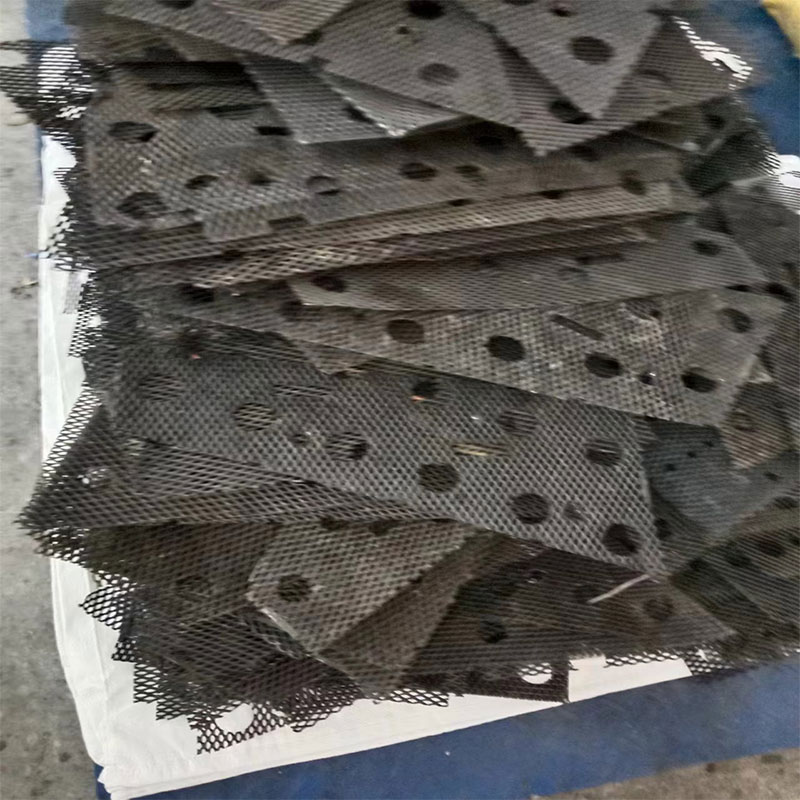
Spent MMO (Mixed Metal Oxide) titanium anodes, ruthenium-iridium coated titanium meshes, titanium plates, and other electrode scrap containing precious metals may still retain valuable elements such as ruthenium, iridium, or platinum. Through professional testing and evaluation, these precious metals can be recovered based on their content and the actual condition of the materials.
Dongguan J&F Precious Metal Trading Co., Ltd. specializes in the recycling of titanium anodes and industrial scrap containing precious metals. Our recycling scope includes spent MMO titanium anodes, ruthenium-iridium coated titanium meshes, platinum-plated titanium plates, titanium tubular electrodes, and other industrial waste containing ruthenium, iridium, or platinum. We provide comprehensive evaluations—factoring in material specifications, coating types, actual quantities, usage status, and testing results—to offer precious metal recovery services for enterprises in sectors such as industrial wastewater treatment, pharmaceuticals, textiles, and chemical manufacturing.