

 8613480627251
Industrial circulating cooling water is widely used in sectors such as manufacturing, power generation, chemical processing, and commercial building infrastructure. As cooling water circulates over extended periods, continuous evaporation leads to an increasing concentration of minerals—primarily calcium and magnesium. These minerals tend to form scale on the inner surfaces of heat exchangers and pipelines, which impairs heat transfer efficiency and drives up both energy consumption and maintenance costs.
To alleviate the management burdens associated with the continuous dosing of traditional chemical agents, electrochemical scale inhibition technology has gained increasing attention within the industrial sector. Titanium anodes serve as a critical component in these electrochemical treatment systems, providing a stable interface for anodic reactions and facilitating the precipitation of minerals present in the circulating water. This technology is specifically designed for industrial circulating cooling water treatment and is not intended for use with drinking water or in medical applications.
I. Working Principle of Electrochemical Scale Inhibition
Conventional scale inhibition methods typically rely on the continuous addition of chemical inhibitors to alter the crystallization and deposition processes of minerals in the water, thereby reducing scale formation. In contrast, electrochemical scale inhibition utilizes electric current to modify the local chemical environment near the electrodes, inducing the targeted precipitation of calcium and magnesium ions.
Within the electrolysis unit, a water reduction reaction occurs at the cathode surface, generating hydrogen gas and hydroxide ions, which raises the local pH. Under these conditions, substances such as calcium carbonate and magnesium hydroxide are more prone to precipitation. They preferentially adhere to the cathode surface, from which they can be subsequently removed through cleaning or blowdown (draining) processes, effectively lowering the risk of scale accumulation in heat exchangers and pipelines.
The titanium anode facilitates anodic oxidation reactions—predominantly the oxygen evolution reaction. Its surface is typically coated with mixed metal oxides (MMO), which provide excellent electrocatalytic activity and ensure the stable operation of the electrolysis system.
II. Material Advantages of Titanium Substrates and Coatings
Industrial titanium anodes generally utilize commercially pure titanium—conforming to the ASTM B265 standard—as a substrate. Titanium offers superior corrosion resistance, high mechanical strength, and excellent processability, making it well-suited for the demanding, long-term operating environments of industrial circulating cooling water systems. Titanium substrates are typically coated with metal oxides—such as RuO₂, IrO₂, or Ta₂O₅—to create a Mixed Metal Oxide (MMO) coating with electrocatalytic properties. An optimized coating formulation can enhance activity for the oxygen evolution reaction and reduce the overpotential of electrode reactions, which helps control electrolytic cell voltage and operational energy consumption.
However, actual electrode performance also depends on factors such as water quality, current density, coating application processes, and equipment design; therefore, the selection of electrodes must be tailored to specific operating conditions.
III. Operational Value: Low Maintenance and Water Conservation
Titanium anodes offer excellent dimensional stability, maintaining their structural integrity under appropriate operating conditions and reducing the maintenance costs associated with frequent replacements. Nevertheless, the coating will gradually wear down during long-term electrochemical operation, necessitating periodic inspections of the electrode condition and system operating parameters.
Regarding water conservation, electrochemical scale-inhibition systems help control scaling in heat-exchange equipment, enabling a higher "cycles of concentration" (concentration ratio) for circulating cooling water. Increasing this ratio effectively reduces the volume of system blowdown and the demand for make-up water, thereby lowering both water consumption and operational costs.
It should be noted that the actual water-saving performance depends on factors such as raw water quality, system design, treatment capacity, and operational management. Furthermore, calcium and magnesium precipitates that form on the cathode must be removed in a timely manner to prevent any adverse impact on electrode reaction efficiency.
Overall, by combining corrosion-resistant titanium substrates with noble metal oxide coatings, titanium anodes provide a stable electrode solution for electrochemical scale inhibition in industrial circulating cooling water systems. They offer significant value by mitigating scaling risks, optimizing system maintenance, and improving the efficiency of water resource utilization.
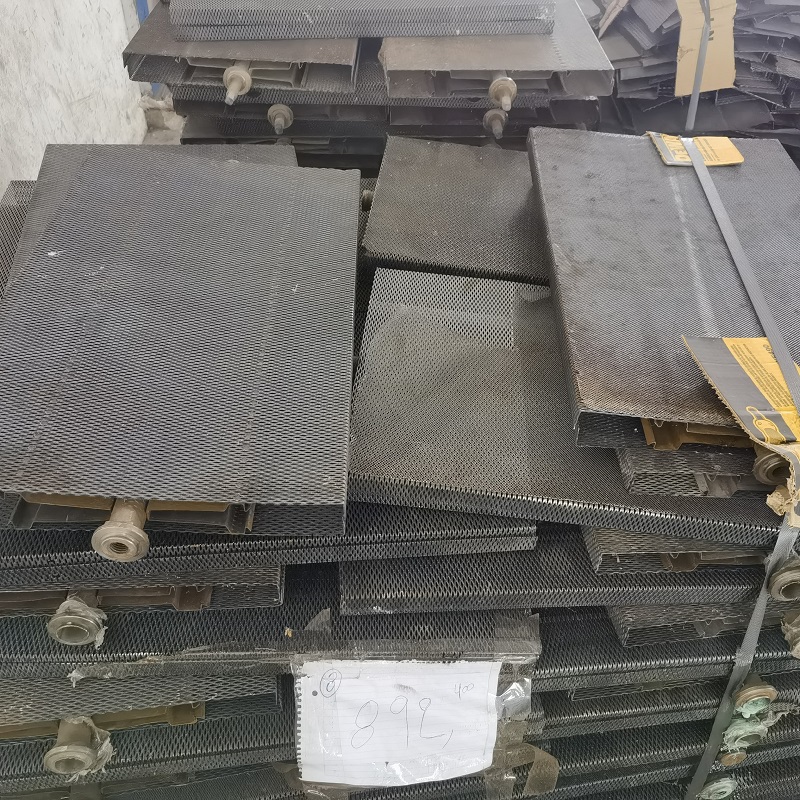
Dongguan J&F Precious Metal Trading Co., Ltd. specializes in the recycling of titanium anode scrap and other precious metal-bearing waste. The company provides professional assessment services for the recovery of various materials, including spent MMO titanium anodes from ballast water treatment systems, ruthenium-iridium coated titanium meshes, as well as titanium plates and tubular anodes. Through precise material identification, analysis of precious metal content, and expert evaluation, the company assists clients in the effective recovery and repurposing of end-of-life electrode materials.