

 8613480627251
Printing and dyeing wastewater—characterized by high chromaticity, high salinity, significant fluctuations in water quality, and poor biodegradability—has long posed a major challenge in the field of industrial wastewater treatment. Traditional chemical flocculation processes typically require the continuous addition of flocculants and other auxiliary agents; this not only increases chemical procurement costs but also generates large volumes of dye-laden sludge, placing a burden on subsequent disposal efforts.
With the advancement of industrial wastewater treatment technologies, decolorization processes that leverage chloride ions already present in the wastewater—via electrochemical oxidation to generate active chlorine *in situ*—have gained increasing attention. In such systems, coated titanium anodes serve as a critical component; their catalytic performance, corrosion resistance, and operational stability directly dictate the system's treatment efficacy and efficiency.
I. In-Situ Chlorine Generation: Utilizing Wastewater Salinity for Oxidative Decolorization
During printing and dyeing processes, salts such as sodium chloride are frequently employed as dyeing accelerators, leveling agents, or process auxiliaries, resulting in high concentrations of chloride ions in the wastewater. These chloride ions not only contribute to the salinity of the effluent but also serve as raw material for electrochemical oxidation reactions.
In an electrochemical treatment system centered on titanium anodes, the application of direct current triggers oxidation reactions at the anode surface. Chloride ions are converted into chlorine gas, which subsequently forms active chlorine species, such as hypochlorous acid and hypochlorite ions. These active chlorine species possess strong oxidizing capabilities, enabling them to break down the chromophores within dye molecules—such as azo bonds and certain conjugated structures—thereby reducing the color of the wastewater.
Compared to the direct addition of sodium hypochlorite, electrochemical *in-situ* chlorine generation utilizes the chloride ions already present in the wastewater. This reduces reliance on externally sourced chlorine-containing chemicals, while simultaneously lowering the requirements for chemical storage and transportation.
It should be noted, however, that actual treatment performance is not solely dependent on anode characteristics; it is also closely influenced by factors such as chloride ion concentration, wastewater pH, the specific type of dye present, temperature, current density, and hydraulic retention time. Furthermore, the active chlorine oxidation process may generate chlorinated by-products; therefore, reaction conditions must be controlled based on specific water quality parameters, and appropriate downstream treatment measures must be implemented.
II. Structural Design of Titanium Anodes: Adapting to the Complex Conditions of Printing and Dyeing Wastewater
Printing and dyeing wastewater is typically characterized by high salinity, significant temperature fluctuations, and substantial variations in pH. These conditions impose rigorous requirements on the electrical conductivity, coating adhesion strength, and corrosion resistance of electrode materials.
Titanium anodes used in industrial wastewater treatment generally employ commercially pure titanium as a substrate, available in forms such as plates, meshes, expanded meshes, or tubular electrodes. Pre-treatment processes—including sandblasting and acid pickling—are used to refine the substrate surface, thereby enhancing the adhesion between the coating and the titanium base.
Regarding functional coatings, mixed metal oxide (MMO) coatings—composed of oxides of noble metals such as ruthenium and iridium—are commonly utilized. Ruthenium-based coatings exhibit high catalytic activity for chlorine evolution, making them well-suited for electrochemical processes where the oxidation of chloride ions is the primary reaction. Iridium-based and other composite oxide coatings can be specifically formulated to meet the requirements of particular media and reaction conditions.
It should be noted that parameters such as coating thickness, noble metal loading, heat treatment processes, and specific chemical formulations must be determined based on actual product specifications and the operating environment; no single set of parameters can serve as a universal standard for all printing and dyeing wastewater treatment equipment.
When selecting electrodes, one must consider not only chlorine evolution efficiency but also factors such as wastewater temperature, chloride ion concentration, pH levels, current density, operational duration, and the configuration of the electrolytic cell. A well-designed electrode helps maintain a stable electrochemical reaction, slows the degradation of the coating, and reduces the frequency of equipment maintenance.
III. Reducing Chemical Usage to Optimize Wastewater Treatment Costs
Traditional chemical flocculation and decolorization processes require the continuous addition of agents such as flocculants and coagulant aids. For large-scale printing and dyeing enterprises, long-term operation not only incurs ongoing costs for chemical procurement but also generates dye-containing sludge, which leads to additional expenses for sludge dewatering, transportation, and disposal. In-situ electrochemical chlorine generation utilizes electrical energy to drive oxidation reactions, converting chloride ions already present in the wastewater into active chlorine. Under appropriate conditions, this approach can reduce the need for externally sourced oxidizing agents and certain auxiliary chemicals.
Its primary advantages include:
1. Reduced reliance on external chemicals: By leveraging chloride ions present in the wastewater for oxidation, the demand for added chlorine-based chemical agents is lowered.
2. Improved decolorization: Active chlorine can disrupt the chromophoric structures of dye molecules, thereby reducing the color intensity of the wastewater.
3. Alleviated sludge management burden: In suitable process configurations, the use of chemical flocculants can be minimized, leading to a reduction in the volume of sludge generated.
4. Ease of automated control: The electrochemical reaction process can be precisely managed by adjusting parameters such as current, voltage, and operating duration.
However, electrochemical treatment does not eliminate the need for chemical agents entirely, nor can it guarantee that all types of wastewater will meet discharge standards through in-situ chlorine generation alone. For wastewater characterized by high organic concentrations, insufficient salinity, or complex composition, it is typically necessary to integrate other processes—such as biochemical treatment, coagulation-sedimentation, filtration, or advanced oxidation—to develop a comprehensive treatment solution tailored to the specific water quality.
IV. Engineering Applications: Focusing on Water Quality Compatibility and Safe Operation
In regions with a high concentration of textile printing and dyeing industries, the continuous tightening of industrial wastewater discharge standards has driven an increasing demand for efficient, stable, and low-reagent-consumption treatment technologies. Electrochemical decolorization using titanium anodes can harness the inherent salinity found in some printing and dyeing wastewater, thereby reducing dependence on externally sourced chlorine-based oxidants; this makes it a valuable option for projects where the wastewater composition is suitable.
During the engineering design phase, the following factors must be carefully evaluated:
- Chloride ion concentration: To determine whether the wastewater meets the fundamental requirements for in-situ chlorine generation.
- Wastewater composition: To analyze the types of dyes, the concentration of organic matter, and the presence of any other substances that might interfere with electrode reactions.
- Operational parameters: To establish appropriate settings for current density, electrolysis duration, temperature, and inter-electrode spacing. - By-product Control: Monitor residual active chlorine and potential chlorinated by-products; install dechlorination and downstream treatment facilities if necessary.
- Electrode Maintenance: Regularly inspect the condition of the coating, surface scaling, and connection points to prevent abnormal operating conditions from compromising electrode performance.
For overseas textile printing and dyeing enterprises, in-situ chlorine generation can also reduce the need to procure, transport, and store liquid chlorine-based agents. However, the safety and environmental benefits must be evaluated holistically, taking into account on-site ventilation, the sealing of electrolytic cells, gas management, and by-product control measures.
V. Recycling and Resource Recovery of Srcap Titanium Anodes
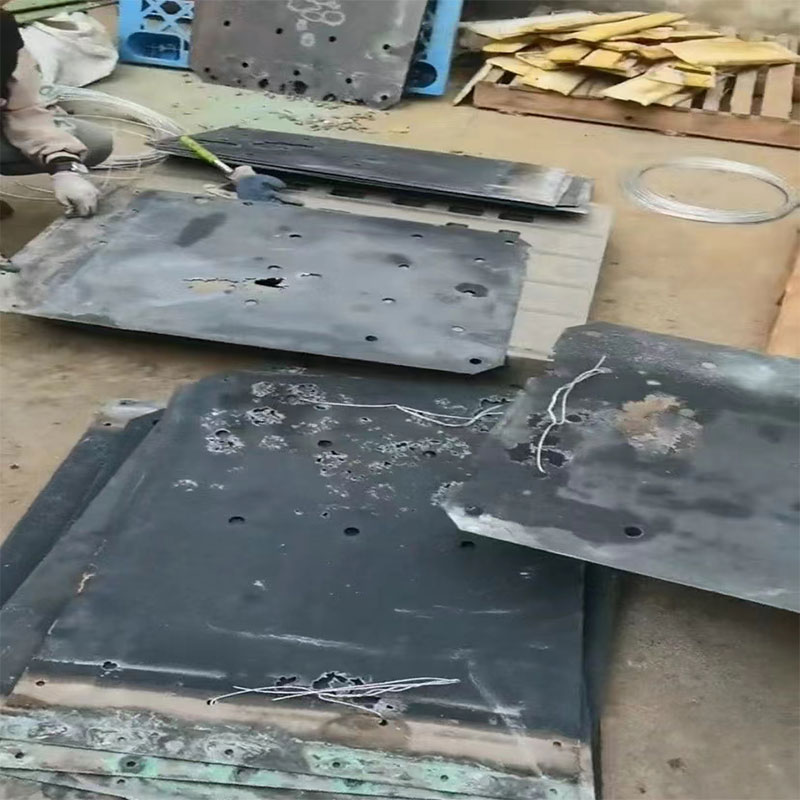
During long-term operation, the precious metal oxide coating on the surface of a titanium anode gradually wears away, which may lead to a decline in catalytic performance, localized coating detachment, or reduced current efficiency. When an electrode can no longer meet production requirements, it typically necessitates maintenance, recoating, or replacement.
Spent MMO (Mixed Metal Oxide) titanium anodes, ruthenium-iridium coated titanium meshes, titanium plates, and other electrode scrap containing precious metals may still hold value due to the presence of metals such as ruthenium and iridium. Through professional assessment and recycling processes, these valuable metal resources can be recovered and reused.
Dongguan J&F Precious Metal Trading Co., Ltd. specializes in the recycling of titanium anodes and precious metal scrap. Our recycling scope includes spent MMO titanium anodes, ruthenium-iridium coated titanium meshes, platinum-plated titanium plates, titanium tubular electrodes, and other industrial waste containing ruthenium, iridium, or platinum. We provide comprehensive recycling services for industrial enterprises, with valuations based on material specifications, coating types, actual quantities, usage status, and testing results.