

 8613480627251
Ammonia-nitrogen is a common pollutant in industrial and domestic wastewater, existing primarily as free ammonia (NH₃) and ammonium ions (NH₄⁺). Excessive concentrations of ammonia-nitrogen can lead to water eutrophication, disrupt the normal growth of aquatic organisms, and complicate downstream wastewater treatment processes. Consequently, the efficient and stable removal of ammonia-nitrogen from wastewater has long been a key focus in the field of industrial wastewater treatment.
With the advancement of electrochemical water treatment technologies, titanium anodes—valued for their excellent corrosion resistance, high electrocatalytic activity, and long service life—are increasingly being utilized in ammonia-nitrogen wastewater treatment systems. In particular, titanium anodes coated with metal oxides (such as ruthenium or iridium) can facilitate the conversion and removal of ammonia-nitrogen through both direct and indirect oxidation pathways.
I. Basic Principles of Ammonia-Nitrogen Removal Using Titanium Anodes
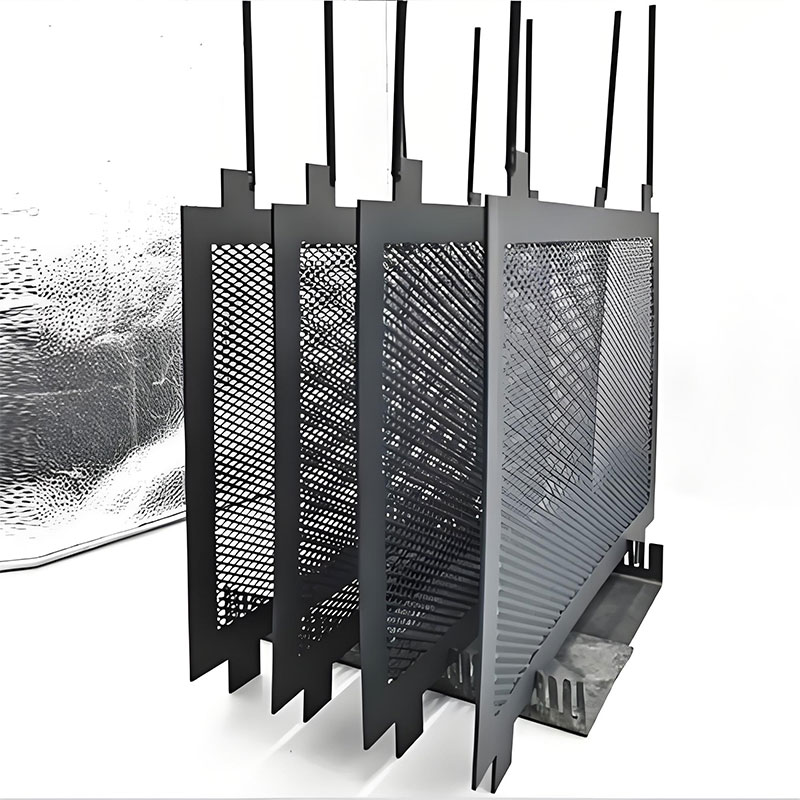
Titanium anodes typically consist of a titanium substrate—in the form of a plate, mesh, or tube—coated with electrocatalytically active metal oxides, creating what is known as a Dimensionally Stable Anode (DSA) or Mixed Metal Oxide (MMO) insoluble anode. When an electric current is applied, oxidation reactions occur at the anode surface. Leveraging the electrode's inherent catalytic properties and the active oxidizing species generated during electrolysis, ammonia-nitrogen in the wastewater is converted into products such as nitrogen gas and nitrates.
Depending on the reaction site and the oxidation mechanism, the process is categorized into direct oxidation and indirect oxidation.
II. Direct Oxidation: Ammonia-Nitrogen Removal via Surface Catalysis
Direct oxidation refers to the process wherein ammonia molecules or ammonium ions in the wastewater migrate to the surface of the titanium anode under the influence of an electric field. Once there, they undergo electron-transfer reactions at the catalytically active sites on the electrode surface, resulting in their oxidation.
In this process, ammonia-nitrogen is first adsorbed onto the anode surface, followed by a series of electrochemical reactions that facilitate its gradual conversion. Depending on factors such as the electrode material, potential, pH value, and operating conditions, the final products may include nitrogen gas, nitrites, or nitrates. Among these processes, the conversion of ammonia nitrogen into nitrogen gas—which effectively removes nitrogen from the aqueous phase—is a key objective of the electrochemical oxidation of ammonia nitrogen.
The efficiency of direct oxidation is closely linked to the catalytic performance of the anode material. Coatings composed of metal oxides, such as those of ruthenium or iridium, can enhance the reactivity of the electrode surface, thereby promoting the oxidative conversion of ammonia nitrogen. However, since different coatings exert varying influences on reaction pathways and product selectivity, the choice of coating must be tailored to the specific characteristics of the wastewater.
III. Indirect Oxidation: Degradation of Ammonia Nitrogen via Reactive Species
Unlike direct oxidation, indirect oxidation does not rely solely on the direct contact between ammonia nitrogen and the anode surface. Instead, it utilizes highly oxidizing species generated during the electrolysis process to chemically react with ammonia nitrogen within the solution.
Common pathways for indirect oxidation include oxidation by hydroxyl radicals and oxidation by active chlorine species.
1. Hydroxyl Radical Oxidation
Under specific electrode materials and electrolysis conditions, water molecules or hydroxide ions can undergo oxidation at the anode surface, generating reactive oxidizing species such as hydroxyl radicals (·OH).
Hydroxyl radicals possess strong oxidizing power, enabling them to react with ammonia nitrogen and other organic pollutants present in the wastewater, thereby facilitating the degradation and transformation of these contaminants. Depending on the reaction conditions, ammonia nitrogen may be further converted into products such as nitrogen gas, nitrite, or nitrate.
While this oxidation method offers high reactivity, hydroxyl radicals have a short lifespan and tend to react readily with other organic or inorganic substances in the water; consequently, the actual treatment efficiency is influenced by the specific composition of the wastewater.
2. Active Chlorine Oxidation
When wastewater containing ammonia nitrogen also holds a certain concentration of chloride ions (Cl⁻), a titanium anode can oxidize these ions to produce chlorine gas. Once dissolved in water, this chlorine gas forms active chlorine species, such as hypochlorous acid (HClO) and hypochlorite ions (ClO⁻).
These species exhibit strong oxidizing capabilities and can react with ammonia nitrogen to form various nitrogen-containing intermediates, which, under appropriate conditions, may be further converted into products such as nitrogen gas. Active chlorine oxidation offers distinct advantages in the treatment of saline wastewater; however, the reaction process is influenced by factors such as chloride ion concentration, pH, current density, and reaction time. If not properly controlled, it may lead to the formation of chloramines, chlorates, perchlorates, and other chlorine-containing byproducts. Consequently, in practical engineering applications, it is essential to carefully regulate operating conditions and conduct necessary monitoring of the treated effluent.
IV. Key Factors Influencing Ammonia-Nitrogen Removal Using Titanium Anodes
The efficiency of ammonia-nitrogen removal using titanium anodes depends not only on the electrodes themselves but also, significantly, on the characteristics of the wastewater and the design of the electrolysis system.
- Coating Material: Coatings based on ruthenium, iridium, or other mixed metal oxides possess distinct catalytic properties, which influence the rate of oxidation reactions and the selectivity of the products.
- pH Value: The pH level affects the equilibrium between ammonia and ammonium ions, while also altering the speciation of active chlorine and the efficiency of the reactions.
- Current Density: Current density dictates the rate of oxidation reactions at the anode surface; however, excessively high current density can lead to increased energy consumption and promote undesirable side reactions.
- Chloride Ion Concentration: Chloride ions are a primary source for the generation of active chlorine, and their concentration directly influences the indirect oxidation process.
- Reaction Time: An appropriate residence time facilitates a higher degree of ammonia-nitrogen conversion, though a balance must be struck between treatment efficiency and operational costs.
Therefore, in practical applications, the selection of anode materials and electrolysis processes should be tailored to the specific ammonia-nitrogen concentration, organic matter content, salinity, pH, and discharge requirements of the wastewater.
V. Advantages of Titanium Anodes in Ammonia-Nitrogen Wastewater Treatment
Compared to some conventional treatment methods, electrochemical oxidation technology features a relatively compact equipment footprint, adjustable operating parameters, and a high degree of automation. As a core component, titanium anodes offer excellent mechanical strength and corrosion resistance, making them well-suited for a wide range of industrial wastewater treatment environments.
Furthermore, metal oxide coatings provide superior electrocatalytic activity, which helps enhance the efficiency of oxidation reactions. Under optimized process conditions, this technology can also be integrated with biological treatment, filtration, or other advanced treatment processes to improve overall wastewater treatment performance. It should be emphasized that electrochemical oxidation does not entirely eliminate the risk of secondary pollution. In practical operation, attention must still be paid to issues such as the formation of by-products, residual active chlorine, sludge generation, and the degradation of electrode coatings. Process optimization and effluent monitoring are essential to ensure that treatment outcomes meet the required standards.
Conclusion
In the treatment of wastewater containing ammonia nitrogen, titanium anodes facilitate the conversion and removal of ammonia nitrogen primarily through two mechanisms: direct electrochemical oxidation and indirect oxidation mediated by active species. The composition, catalytic activity, and stability of the metal oxide coatings are critical factors influencing the performance of these electrodes.
As industrial wastewater discharge standards continue to become more stringent, ruthenium-iridium-titanium anodes, mixed metal oxide (MMO) titanium anodes, and other functional electrode materials hold significant potential for application in the field of electrochemical water treatment. Furthermore, spent titanium meshes, plates, and anodes—particularly those featuring coatings of precious metals like ruthenium and iridium—possess inherent resource recovery value; through professional testing and assessment, these precious metal resources can be reclaimed and recycled.