

 8613480627251
Water electrolysis hydrogen production systems decompose water into hydrogen and oxygen through an electrolytic reaction. To ensure continuous and stable operation, such systems typically comprise a hydrogen subsystem, an oxygen subsystem, an electrolyte circulation subsystem, a feed-water supply subsystem, and a cooling water subsystem. These subsystems work in coordination to perform tasks including gas-liquid separation, gas cooling, electrolyte circulation, feed-water replenishment, and operating temperature control.
I. Hydrogen Subsystem
Hydrogen gas generated in the electrolyzer typically carries some electrolyte. This gas-liquid mixture exits the electrolyzer—via outlets located on the end plates—and enters a hydrogen separator. Inside the separator, the hydrogen is disengaged from the electrolyte; the hydrogen gas is discharged from the top, while the electrolyte remains in the separator and is returned to the electrolyzer via the circulation system.
The separated hydrogen then enters a hydrogen cooler to reduce its temperature. This component is generally a shell-and-tube heat exchanger, with the hydrogen flowing through the tubes and cooling water circulating through the shell. After cooling, the hydrogen passes through a wire-mesh mist eliminator, which removes any remaining entrained liquid droplets; the captured liquid is then returned to the hydrogen separator.
Subsequently, the hydrogen enters a hydrogen gas-liquid separator (or condensate separator) for further removal of condensed liquid. This condensate is drained via a blowdown valve, and the processed hydrogen is directed to downstream systems through a pneumatic diaphragm control valve. Specific configurations for gas purification, drying, and pressure control are determined by the equipment design.
II. Oxygen Subsystem
The basic process for the oxygen subsystem is similar to that of the hydrogen subsystem. Oxygen generated in the electrolyzer carries electrolyte into an oxygen separator, where the bulk of the electrolyte is removed through gas-liquid separation. The gas then undergoes cooling and further gas-liquid separation to reduce its moisture and liquid droplet content.
The separated electrolyte is returned to the circulation system, while the condensate is either drained or recovered, depending on the equipment design. The processed oxygen is then delivered to designated pipelines or downstream processing equipment.
Although the hydrogen and oxygen subsystems follow similar processes, they must remain strictly independent of each other to prevent the two gases from mixing. The system also requires the installation of monitoring devices for pressure, temperature, liquid level, and gas purity, along with interlocks and safety protection measures configured according to process requirements.
III. Electrolyte Circulation System
The electrolyte circulation system is responsible for maintaining the appropriate electrolyte concentration, flow rate, and temperature within the electrolytic cell; it is a critical component for ensuring the stability of the electrolytic reaction.
During electrolysis, hydrogen and oxygen gases carry a portion of the electrolyte into their respective gas-liquid separators. Once the alkaline solution pump is activated, the electrolyte in the separators flows through connecting pipes into the circulation loop, passes through an alkaline solution cooler and a filter, and then returns to the electrolytic cell, establishing a continuous circulation.
The electrolytic reaction generates heat. As the circulating electrolyte passes through the alkaline solution cooler, it transfers heat to the cooling water, thereby regulating the electrolyte temperature and preventing excessive heat from adversely affecting equipment operation or electrode performance.
Additionally, feed water is typically introduced into the system via the electrolyte circulation loop to compensate for the water consumed during the electrolytic reaction. The specific injection point and circulation method depend on the design and configuration of the electrolytic cell.
IV. Feed Water Supply System
In the water electrolysis process, water is continuously consumed to produce hydrogen and oxygen. Consequently, a steady supply of feed water—meeting specific process requirements—is necessary to maintain the system's material balance and ensure stable operation.
Feed water is generally supplied by a pump (some systems utilize a plunger pump). The operation of this pump is managed by a PLC control system, triggered by signals from differential pressure transmitters or other liquid-level and pressure monitoring instruments. When monitored values fall below a set range, the control system activates the pump; once the required conditions are met, the pump stops or adjusts its operating state.
Depending on the specific equipment design, the feed water pump draws water from a feed water tank and delivers it—via a check valve—into the designated supply piping, directing it into the separators or the electrolyte circulation system. The volume of water supplied must align with the actual hydrogen production load to avoid issues caused by insufficient or excessive water input.
The quality of the feed water is also of critical importance. Impurities in water can impair electrolyte performance, increase the risk of equipment scaling, or adversely affect electrodes and other components; therefore, water must be treated appropriately in accordance with the equipment's requirements.
V. Cooling Water System
The cooling water system is primarily used to remove heat from hydrogen, oxygen, and the circulating electrolyte, helping the equipment maintain an optimal operating temperature.
Once the external cooling water enters the system, it is typically divided into separate branches: one flows to the gas coolers to lower the temperature of the hydrogen and oxygen, while another passes through a pneumatic control valve to the electrolyte cooler, where it cools the circulating electrolyte.
The control valve in the electrolyte cooling branch regulates the flow of cooling water based on the electrolyte temperature, as measured by a platinum resistance temperature sensor. Within the heat exchanger, the cooling water and the electrolyte exchange heat across isolated heat-transfer surfaces; some systems employ a counter-current heat exchange configuration to enhance efficiency.
After the heat exchange process, the cooling water flows into a return header and is directed back to the external cooling water circulation unit for reuse. The flow rate, temperature, and pressure of the cooling water must meet the equipment's design specifications to ensure sufficient heat dissipation and stable, continuous operation.
VI. Recycling of Spent Electrolyzers and Electrode Materials
Following long-term operation, electrolyzers and their internal components may require replacement due to equipment upgrades, maintenance, or the end of their service life. The material composition of the electrolyzer housing, electrodes, connectors, and other internal components varies depending on the electrolysis technology employed and the specific design of the manufacturer.
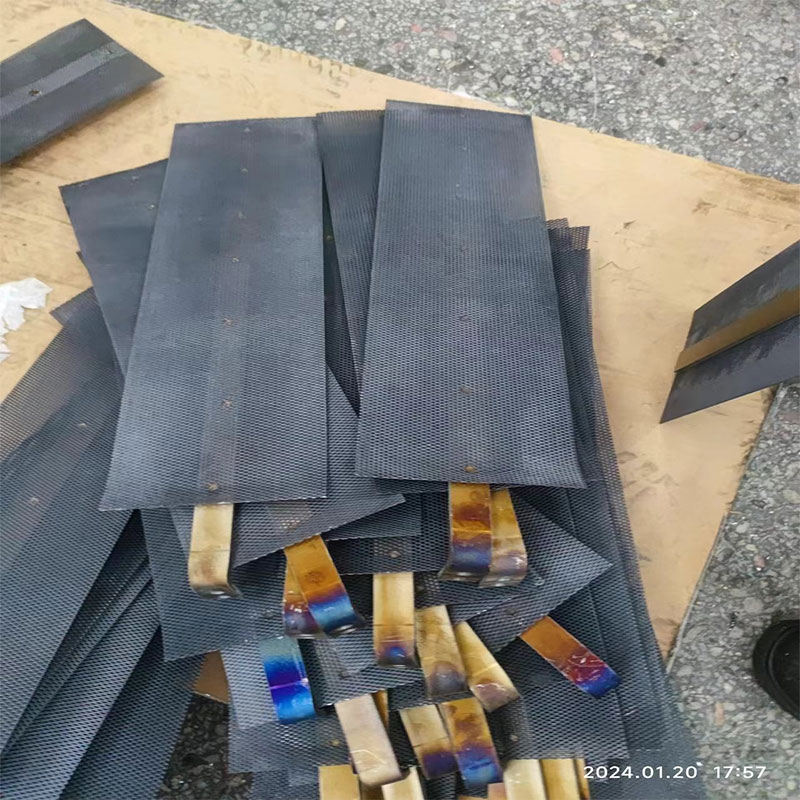
It should be noted that not all water electrolysis hydrogen-production equipment utilizes titanium anodes or electrodes coated with precious metals. Alkaline water electrolysis systems, for instance, often employ nickel-based electrodes, whereas other types of electrochemical equipment may use titanium substrates coated with precious metals such as platinum, ruthenium, or iridium. Consequently, before initiating any recycling process, it is essential to verify the equipment type, material composition, and the specific application of the electrodes. Dongguan J&F Precious Metal Trading Co., Ltd. specializes in the recycling of spent electrolytic cells and related industrial electrode scrap. This includes, but is not limited to, used titanium anodes, titanium mesh, titanium plates, platinum-coated titanium electrodes, ruthenium-iridium-coated titanium anodes, and other materials containing precious metals. For complete electrolytic cell units or bulk dismantled components, we provide assessments based on equipment structure, material type, actual weight, the condition of any coatings, and precious metal content.
If you have such equipment or scrap materials for disposal, please provide photographs, a material inventory, quantities, actual weight, original application details, and any available composition analysis reports to facilitate an initial assessment. Final recycling proposals and price quotes will be determined based on the verification and testing of the materials.