

 8613480627251
The ruthenium-based coated titanium anode (RuO₂-TiO₂/Ti) is a mature DSA dimensionally stable anode. Relying on the excellent catalytic activity of ruthenium dioxide for chlorine evolution, its resistance to chloride ion corrosion, and its relatively moderate cost, it is widely used in projects such as chlorine production by electrolysis, seawater electrolysis, circulating water treatment, and cathodic protection. Unlike laboratory performance testing, the salt content, water temperature, water flow rate, and impurity content in actual working conditions directly affect the current efficiency and service life of the anode. Below, we select three representative industrial cases to analyze and summarize the practical application of ruthenium-based coated titanium anodes.
Case 1: Water Reuse in Chemical Industrial Park - Sodium Hypochlorite Generator Disinfection Project
The water treatment station in a certain chemical industrial park has a processing capacity of 5000m³/d, and the effluent water must meet the microbial indicators for reuse in greening and circulating water replenishment. The original plan was to use outsourced finished sodium hypochlorite solution for disinfection. However, the transportation and storage of finished chemicals pose high risks, the effective chlorine content of the chemicals decays rapidly, and the cost of dosing fluctuates greatly. After the renovation, a sodium hypochlorite generator equipped with a ruthenium-coated titanium mesh anode was selected, and low-concentration saltwater was used for on-site electrolysis to produce chlorine.
The anode is a mesh-like ruthenium-coated titanium anode, operating at a current density of 600A/m². Monitoring data from 12 months of continuous operation reveals that the current efficiency of the equipment remains stable at around 70%, with a stable effective chlorine concentration of sodium hypochlorite produced, and the total bacterial count in the reclaimed water consistently meets standards. Compared to the mode of purchasing external chemicals, the cost of disinfection operations has decreased by approximately 28%, while eliminating the pressure of hazardous chemical storage and management.
Operational and maintenance challenges: The raw water contains trace amounts of organic matter and hardness ions, leading to the accumulation of calcium and magnesium scale on the anode surface after prolonged operation. The solution involves regular acid cleaning every month, with controlled acid cleaning duration to prevent corrosion of the coating. This case demonstrates that ruthenium-based titanium anodes are highly suitable for on-site disinfection of saline reclaimed water.
Case 2: Ballast Water Treatment for Ocean-Going Vessels - Seawater Electrolysis Disinfection Project
The ballast water treatment system of a certain bulk carrier adopts an electrolytic seawater solution, with a seawater chloride ion content of approximately 20,000 mg/L, resulting in extremely corrosive media. The project utilizes tubular ruthenium-coated titanium anode components, which are required to generate active chlorine through electrolysis in a short period of time, effectively killing plankton and larvae in the ballast water and meeting the international ballast water D-2 emission standards.
Under seawater conditions, ordinary anodes are highly susceptible to corrosion and dissolution, whereas ruthenium-coated titanium anodes exhibit outstanding resistance to chloride ion corrosion and high selectivity in chlorine evolution reaction. Under the alternating water temperature and flow fluctuations during ship navigation, the entire electrolysis unit has operated stably for 3 years, with no large-scale coating detachment on the anode and stable production of active chlorine.
The pain point of this case lies in the fact that seawater contains sediment, which is prone to fouling the surface area of the electrodes, necessitating a supporting self-cleaning structure. Compared to high-cost anodes such as iridium-tantalum, ruthenium-based anodes offer a higher cost-performance ratio in this scenario and are the mainstream choice for ship ballast water electrolysis.
Case 3: Online Electrolysis Disinfection Project for Circulating Cooling Water in Thermal Power Plant
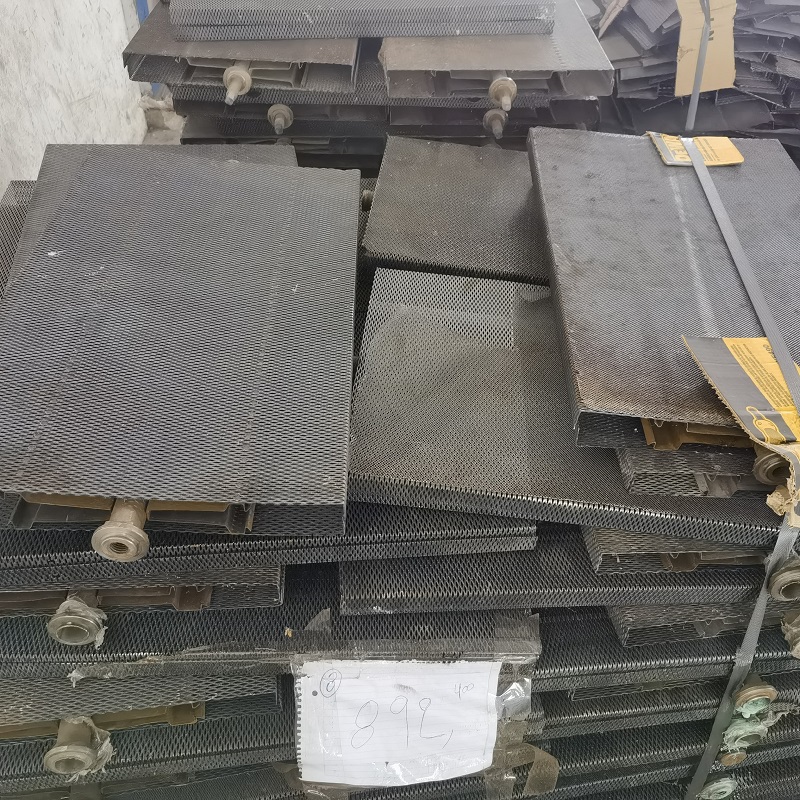
A thermal power plant in the north has a circulating water volume of 20,000 m³/h. The circulating water is continuously concentrated, leading to severe growth of bacteria, algae, and slime, which reduces the heat exchange efficiency of the heat exchanger. The original solution involved long-term addition of oxidizing bactericides, which required a large dosage and generated a significant amount of wastewater containing chemicals. The renovation adopted a ruthenium-coated plate-type titanium anode electrolysis device to electrolyze chloride ions in the circulating water online, generating active chlorine in situ for bactericidal and algaecidal purposes.
After being put into use, the adhesion of slime in the circulating water has been significantly improved, the indicators of bacteria and algae are controllable, the dosage of chemical bactericides has been reduced by more than 60%, the cleaning cycle of heat exchangers has been extended from 3 months to 8 months, and the loss due to downtime for cleaning has been reduced. However, it was also found in this project that when the chloride ion concentration in the circulating water is low, the oxygen evolution side reaction intensifies, and the anode wear accelerates. Therefore, it is necessary to control the chloride ion concentration in the circulating water within a reasonable range.
Comprehensive Summary of Cases
From the three engineering cases, it can be observed that the advantages of ruthenium-based coated titanium anodes are mainly concentrated in good chlorine evolution activity, resistance to chloride ion corrosion, and moderate cost, making them suitable for electrolytic chlorine production and sterilization in saltwater bodies. However, they also have application boundaries: under strong acidic, high oxidizing, and extremely low chloride ion conditions, the loss rate of the anode coating will significantly accelerate, making them unsuitable for long-term use.
In terms of post-use resource utilization, ruthenium-based titanium anodes that have reached their service life can be uniformly recycled. The titanium substrate can be polished and reused after being coated with a new layer. The precious metal ruthenium in the coating can be refined and regenerated, reducing the consumption of materials for enterprises and meeting the requirements of industrial circular economy.
When selecting the anode, enterprises need to design the anode structure reasonably based on the chloride ion concentration, water hardness, impurity conditions, and current density of the water body, and formulate a supporting regular cleaning and maintenance plan to maximize the performance of the ruthenium-coated titanium anode and extend its service life.