

 8613480627251
Titanium is a key material in the aviation industry, with jet engines being the largest consumer of titanium. According to US statistics, between 1959 and 1973, titanium consumption in the jet engine manufacturing industry accounted for 37% to 50% of the nation's total consumption, while titanium usage in small subsonic jet engines accounted for one-third of their total mass. This is mainly due to the fact that titanium alloys have higher fatigue strength, yield strength, and creep strength at moderate temperatures compared to steel, and their lower elastic modulus effectively reduces fatigue load stress. At the same time, their excellent corrosion resistance improves the working condition of compressors. Increasing the compressor pressure ratio and the gas temperature at the turbine inlet can improve the overall engine efficiency, thereby enhancing thrust, improving the thrust-to-weight ratio, and reducing fuel consumption. The total pressure ratio of engine compressors in the US and UK has increased from 10 to 13 in the early 1960s to 20 to 27 in the 1970s, and it is still on the rise, with the potential to reach 50. Without the use of cooling technology, the turbine inlet temperature of multi-role fighter jets has exceeded 1650°C.
As engine operating conditions become increasingly harsh and engine sizes continue to grow, light alloys and stainless steels are finding it difficult to keep up. Meanwhile, the production costs of titanium alloys and high-temperature alloys are continuously decreasing, and their processing performance is steadily improving. Coupled with the application of new processes, their advantages become even more prominent, leading to an increasing application in engines year by year. Taking the United States as an example, the amount of titanium used in Pratt & Whitney's jet engines accounts for 7% to 15% of the total engine mass; General Electric's J73 engine uses 6% titanium, and the rotor of the J79 engine, which originally had 17 stages made of stainless steel, was later changed to 11 stages made of titanium alloy. Specifically, the J79-8 uses 20% titanium, and the J79-3 uses 4% titanium.
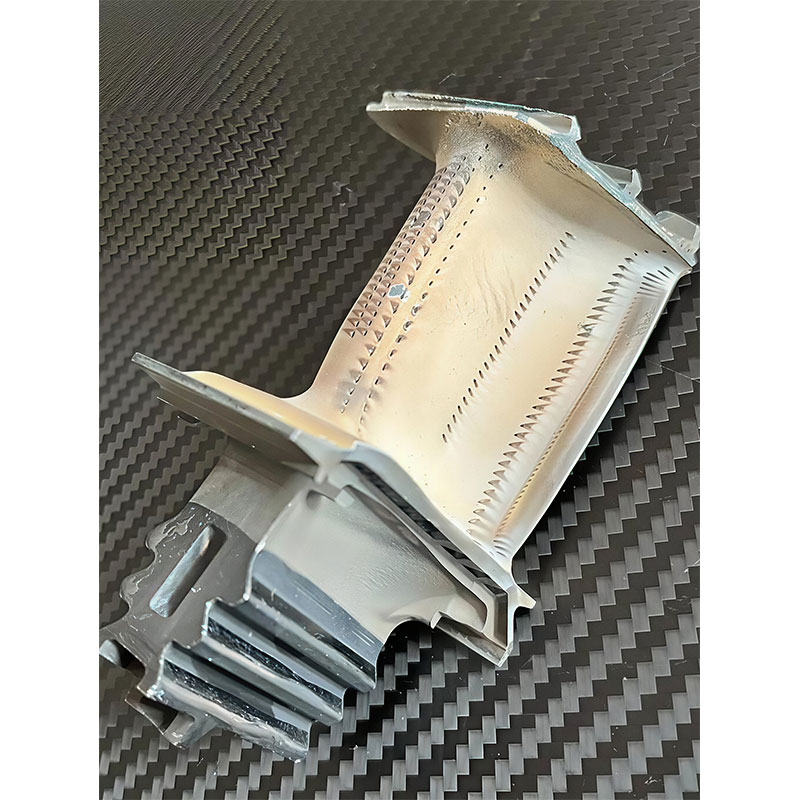
The use of titanium in aero-engines in the United States began in 1954. The J57 engine equipped on the B52 bomber used 7% to 15% titanium. The inlet casing and low-pressure compressor components were made of commercially pure titanium, while the low-pressure compressor blades, disks, and disk spacers were made of Ti-6Al-4V alloy. The JT3D turbofan engine used 15% titanium, with the low-pressure compressor fan blades, blade spacers, and fan valves all made of Ti-6Al-4V. The fan blades were 406 millimeters long, more than twice as long as the compressor blades, significantly improving engine performance. The JT9D turbofan engine used 28% titanium by weight, approximately 1.035 tons, with all 46 fan blades made of Ti-6Al-4V alloy. The low-pressure compressor rotor and 9 of the 11 stages of the high-pressure compressor used Ti-6Al-4V, Ti-8Al-1Mo-1V, and Ti-6Al-2Sn-4Zr-2Mo alloys, with the latter being a high-temperature alloy with a working temperature of 480°C and a consumption of 450 kilograms. The stator blades were made of Ti-5Al-2.5Sn alloy. The TF39 turbofan engine used 33% titanium and was equipped on the C5A military transport aircraft, with each engine using approximately 3 tons of titanium. The compressor disks and blades were made of Ti-6Al-4V and Ti-5Al-2.5Sn alloys; after switching to precision forging technology, the compressor blank mass was reduced from 312 kilograms to 126 kilograms, and the blade blank mass was reduced from 21.5 kilograms to 5.7 kilograms. The GE4 turbojet engine had a total weight of approximately 5 tons and used 10% titanium. The first four stages of the hollow compressor were all made of Ti-6Al-2Sn-4Zr-2Mo alloy, with a working temperature of up to 500°C, which was 100°C higher than that of Ti-6Al-4V.
Replacing steel with titanium in the manufacture of lift engine components can effectively improve the thrust-to-weight ratio. The compressor and turbine of the Japanese JR100 engine were originally made of steel. After being replaced with titanium alloy and heat-resistant aluminum alloy, the thrust-to-weight ratio of the JR200 engine increased from 10 to 16. The first compressor blade, front shaft, compressor disc, turbine rear shaft, and disc were made of KS150 titanium alloy, and the compressor static blade was replaced with Ti-6Al-4V instead of Cr12 stainless steel, resulting in a 43% reduction in mass.
Titanium alloys are also widely used in aero-engines in other countries. The HK8 turbofan engine equipped on the Russian Il-62 transport aircraft uses approximately 40% titanium by weight, and the HK144 engine used in the Tu-144 supersonic transport aircraft also incorporates a significant amount of titanium alloy. The high-pressure compressor wheel of the Rolls-Royce RB172 engine utilizes IMI685 titanium alloy, which exhibits high creep resistance, fracture toughness, and excellent weldability. The internationally co-developed V2500 twin-spool turbofan engine weighs 2.2 tons, with titanium alloy structural components accounting for 31%. Its high-pressure compressor is manufactured by Rolls-Royce, with stages 3 to 6 utilizing the high creep-resistant IMI550 alloy, while the fan and low-pressure compressor are primarily manufactured by Japan using Ti-6Al-4V alloy.
As the use of titanium in aero-engines continues to rise, the amount of waste titanium alloy turbine blades and other components generated from decommissioned aircraft and engines is increasing. These waste blades contain a large amount of alloy elements such as titanium, aluminum, vanadium, molybdenum, and tin, and some high-temperature titanium alloys also contain scarce elements such as zirconium, making them of significant recycling value. Firstly, from a resource perspective, titanium is a rare metal. The chain from ore extraction to sponge titanium production and then to the processing of aviation-grade titanium materials is long and energy-intensive. Recycling waste blades can effectively supplement the supply of titanium resources and reduce dependence on primary titanium ores. Secondly, from an economic perspective, aviation-grade titanium alloys are expensive. After recycling and regeneration, they can be downgraded and used in high-performance industrial products such as marine engineering and chemical equipment, with economic value far exceeding that of ordinary scrap steel, bringing considerable benefits to recycling enterprises. Thirdly, from an environmental perspective, using recycled titanium to produce new materials can significantly reduce energy consumption and carbon emissions compared to primary titanium smelting, reduce the environmental burden caused by the burial of waste blades, and align with the concept of green, low-carbon, and circular development. It is recommended to establish a specialized aircraft turbine blade recycling system, achieving efficient regeneration of titanium alloys through processes such as sorting, coating removal, and vacuum melting, and promoting the development of aviation materials towards resource-saving and environmentally friendly directions.