

 8613480627251
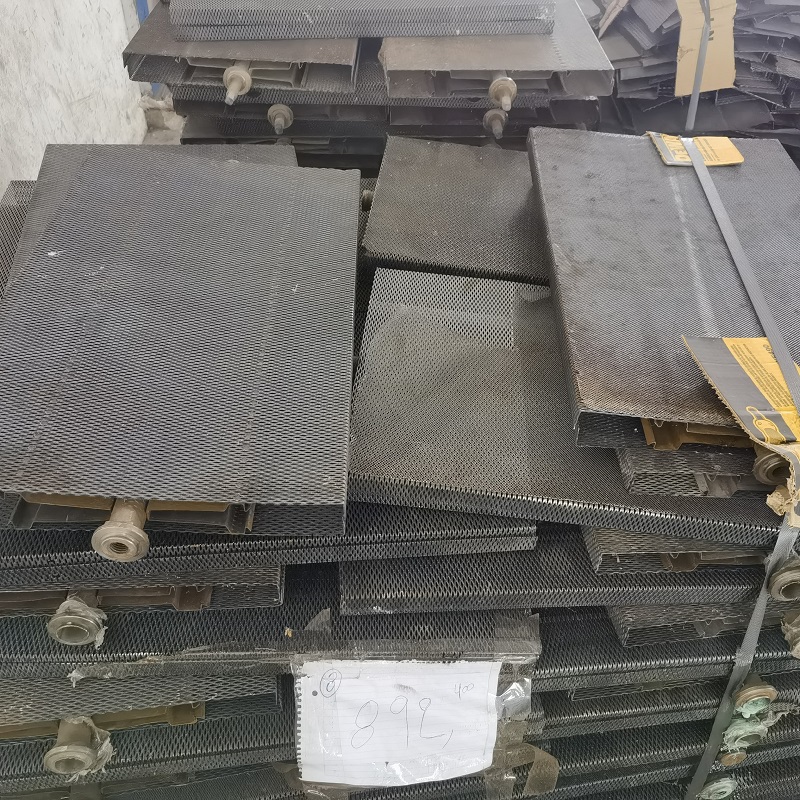
The service life of a platinum-titanium (Pt/Ti) anode depends not only on the thickness of the platinum coating but also, crucially, on the adhesion between the platinum coating and the titanium substrate, the uniformity and porosity of the coating, and the specific operating environment. Given an identical platinum coating thickness, the adhesion between the coating and the substrate serves as a key determinant of the anode’s stability and service life.
I. Why Do Platinum-Titanium Anodes Fail?
A decline in the performance of a platinum-titanium anode during operation does not necessarily mean that the platinum coating has been completely consumed. In some cases, failure occurs because the adhesion between the coating and the titanium substrate is insufficient, leading to cracking, peeling, or localized delamination of the coating. This, in turn, compromises the electrode’s electrical conductivity, catalytic activity, and corrosion resistance.
Therefore, when evaluating the quality of a platinum-titanium anode, one should not focus solely on the thickness of the platinum layer; rather, it is essential to comprehensively assess the coating’s adhesion, density, uniformity, and suitability for the intended operating conditions.
II. Performance Characteristics of Sintered Platinum-Titanium Anodes
Platinum-coated anodes produced via sintering or specific heat-treatment processes benefit from controlled coating formation, which results in superior adhesion and structural stability.
When the manufacturing process is properly controlled, the primary advantages include:
Enhanced Adhesion: This reduces the risk of the coating cracking or delaminating during long-term operation.
Improved Coating Uniformity: This ensures greater consistency in the performance across the electrode surface.
Greater Structural Stability: Optimized process parameters help minimize coating defects and internal stress.
Increased Durability: Under appropriate current density, electrolyte composition, and temperature conditions, these anodes maintain stable performance.
It should be noted that the specific advantages of a sintering process depend on the actual preparation method, heat-treatment parameters, and the level of quality control; therefore, product performance cannot be judged based on the process name alone.
III. Performance Characteristics of Electroplated Platinum-Titanium Anodes
Electroplated platinum-titanium anodes are produced by depositing a platinum layer onto the surface of a titanium substrate via an electrodeposition process. While this process offers certain practical advantages, the quality of the coating is sensitive to factors such as the composition of the plating bath, current density, substrate pretreatment, and deposition conditions.
If the process is not properly controlled, the following issues may arise:
High internal stress: This may increase the risk of the coating cracking or peeling.
Non-uniform coating: This can lead to variations in thickness across the surface, which may affect electrode performance.
High porosity or defects: These can compromise the coating’s protective capabilities and long-term stability.
Poor adhesion: The coating may crack or detach when the substrate undergoes deformation or is subjected to thermal or mechanical stress.
However, the use of an electroplating process does not inherently imply poor coating quality. By optimizing substrate preparation, bath formulation, and deposition parameters, it is possible to enhance the uniformity, adhesion, and durability of the coating.
IV. How to Choose Between Sintering and Electroplating?
Both processes have distinct characteristics. The final choice should be based on a comprehensive assessment of factors such as equipment design, operating environment, performance requirements, manufacturing costs, and long-term maintenance needs.
In applications that demand high coating adhesion, long-term operational stability, and durability, the evaluation should focus on metrics such as adhesion strength, porosity, thickness uniformity, and the results of accelerated life testing—rather than relying solely on coating thickness or the name of the process.
V. Recovery Value of Spent Platinum-Titanium Anodes
Even after long-term use—resulting in coating degradation, localized peeling, or reduced electrode performance—spent platinum-titanium anodes still retain significant recovery value. The value of these spent electrodes depends primarily on the residual platinum content, the condition of the coating, the weight of the titanium substrate, material specifications, and analytical test results.
Dongguan J&F Precious Metal Trading Co., Ltd. specializes in the recovery of industrial precious metal scrap. We provide assessment and recycling services for spent platinum-titanium anodes, platinum-coated titanium mesh, iridium-coated titanium plates, ruthenium-iridium-coated titanium anodes, and other electrode materials containing precious metals.
To obtain a recovery valuation, please provide photographs of the materials, along with details regarding quantity, actual weight, dimensions, operating conditions, and any available composition analysis reports. The final price will be determined based on material verification and test results.