

 8613480627251
In the hydrometallurgical extraction of non-ferrous metals, electrodeposition is a critical process that determines both product purity and production efficiency. The performance of the anode components directly influences the energy consumption, environmental impact, and final product quality of the entire production line. Historically, the industry has predominantly relied on lead-based alloy anodes; however, these electrodes not only entail high energy consumption during operation, but also release dissolved lead impurities that contaminate the electrolyte and the cathodic product. Furthermore, they generate significant quantities of anode sludge—a byproduct that is difficult to manage. Such characteristics are entirely at odds with the current industrial push toward energy conservation, emission reduction, and green manufacturing. Consequently, the industry has long been seeking an alternative electrode solution that is energy-efficient, highly productive, and environmentally friendly.
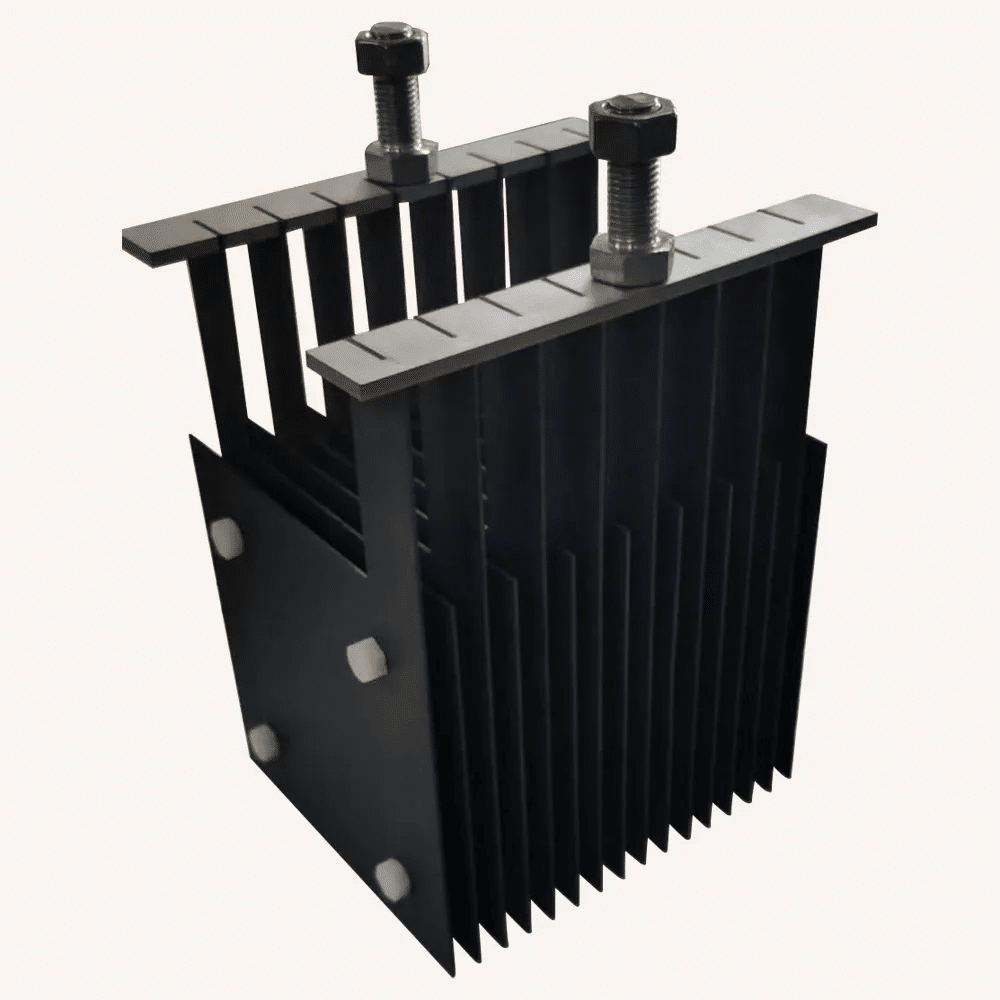
Key Performance Advantages of Titanium Anodes
Compared to traditional lead-based alloy anodes, titanium anodes offer technical advantages throughout the entire production process:
Cell voltage can be reduced by more than 200 mV, resulting in direct energy savings of 5%–10%. In large-scale production lines operating continuously over long periods, the cumulative energy savings are substantial.
They can accommodate higher operating current densities, significantly increasing the output rate of cathodic products and effectively boosting overall production efficiency.
They fundamentally eliminate long-standing industry pain points—such as electrolyte contamination and excessive impurity levels in cathodic products—that are otherwise caused by the electrolytic dissolution of lead-based anodes.
Selection Logic for Titanium Anodes in Various Electrodeposition Systems
Current mainstream electrodeposition processes for cobalt include both chloride and sulfate systems, while nickel electrodeposition primarily utilizes sulfate systems. Differences in operating conditions across these electrolyte systems necessitate distinct choices for titanium anode coatings:
Chloride electrolyte systems: These require titanium anodes with a ruthenium-based noble metal oxide coating designed for chlorine evolution. Suitable operating conditions include a Cl⁻ concentration of 60–150 g/L, a pH of 0–2, a solution temperature of 50–70°C, and a current density of less than 250 A/m², with a stable service life of over 18 months.
Sulfate electrolyte systems: These require titanium anodes with an iridium-based noble metal oxide coating designed for oxygen evolution. Suitable operating conditions include an electrolyte acid content of less than 150 g/L and a specific pH range. 1–3. Under conditions where the solution temperature is below 60°C and the current density is below 300 A/m², these anodes offer a stable service life of 36 months or more.
Iridium-coated titanium anodes have been used for nearly 20 years in the electrodeposition and post-processing of copper foil within sulfuric acid-based systems. The technology is fully mature and currently serves as the standard anode solution for high-end copper foil production lines.
Total Life-Cycle Cost and Long-Term Value
Many industry professionals focus on the initial investment required for titanium anodes. While the upfront procurement cost is approximately 1.5 to 2 times that of lead anodes—making the initial expenditure appear higher—a total life-cycle cost analysis reveals a significant overall economic advantage. Titanium anodes last 2 to 3 times longer than lead anodes. Furthermore, because the titanium substrate remains virtually intact during electrolysis, the old coating can be removed and a new precious metal coating applied, allowing the substrate to be reused and drastically reducing the costs associated with repeated procurement.
Moreover, titanium anodes do not generate anode sludge during operation. This eliminates the need for frequent production stoppages to clean tanks or replace the electrolyte, and removes the requirement for the lead-removal systems typically needed in traditional processes. Consequently, costs related to hazardous waste disposal and losses from production downtime are substantially reduced. In the long term, the total cost of using titanium anodes is far lower than that of lead anodes, with the added benefit of completely avoiding contamination of the electrolyte and the final product by lead impurities.
Fundamental Differences in Operating Principles
The manufacturing logic for titanium anodes differs entirely from that of lead anodes. A titanium substrate undergoes precise pre-treatment before being coated with salts of platinum-group metals; it is then subjected to high-temperature sintering to form a solid solution of precious metal oxides. This oxygen-deficient oxide coating possesses excellent electrical conductivity, enabling stable electrical conduction and electrocatalytic reactions, all while the electrode substrate itself remains entirely uninvolved in any dissolution process. The operation of lead anodes relies on a redox reaction cycle that continuously produces lead sulfate—a substance only sparingly soluble in water. The presence of chloride ions in the electrolyte, however, leads to the formation of soluble lead chloride. This disrupts the reaction equilibrium, causing rapid dissolution and consumption of the lead anode, which drastically shortens its service life. This is the fundamental reason why lead anodes exhibit such poor stability in complex electrolyte environments.
Meanwhile, the electrodeposition of nickel-chromium alloys has emerged as a high-quality coating process. In many applications, these coatings serve as effective alternatives to traditional chromium plating and are widely used in sectors such as automotive, shipbuilding, home appliances, industrial machinery, chemical processing equipment, and the defense industry. Stable titanium anodes are the essential foundation for ensuring uniform coating thickness and consistent quality in these precision alloy electroplating processes.
The transition from lead-based anodes to titanium-based coated anodes is more than just a simple component replacement; it represents an inevitable industrial upgrade for the entire electrodeposition sector toward greater efficiency, improved environmental sustainability, and lower overall costs. Looking ahead, the industry’s technical requirements for titanium anodes will continue to evolve, focusing on higher electrocatalytic activity, greater energy efficiency, and reduced coating costs.
Dongguan J&F Precious Metal Trading Co., Ltd. specializes in the recycling of industrial precious metal waste. Our business encompasses the recovery of spent titanium anodes, ruthenium-iridium coated titanium meshes, iridium-coated titanium plates, platinum-coated titanium electrodes, precious metal catalysts, and other industrial waste materials containing precious metals.