

 8613480627251
In the manufacturing of automotive decorative parts, electronic connectors, and precision hardware, the uniformity of the electroplated layer directly influences product appearance, corrosion resistance, and operational reliability. For workpieces with complex geometries—such as those featuring deep holes, grooves, or sharp angles—uneven current distribution often occurs during the electroplating process. This can lead to issues like localized excessive plating thickness or "burning" (over-plating), as well as insufficient thickness or even gaps in the plating within recessed areas.
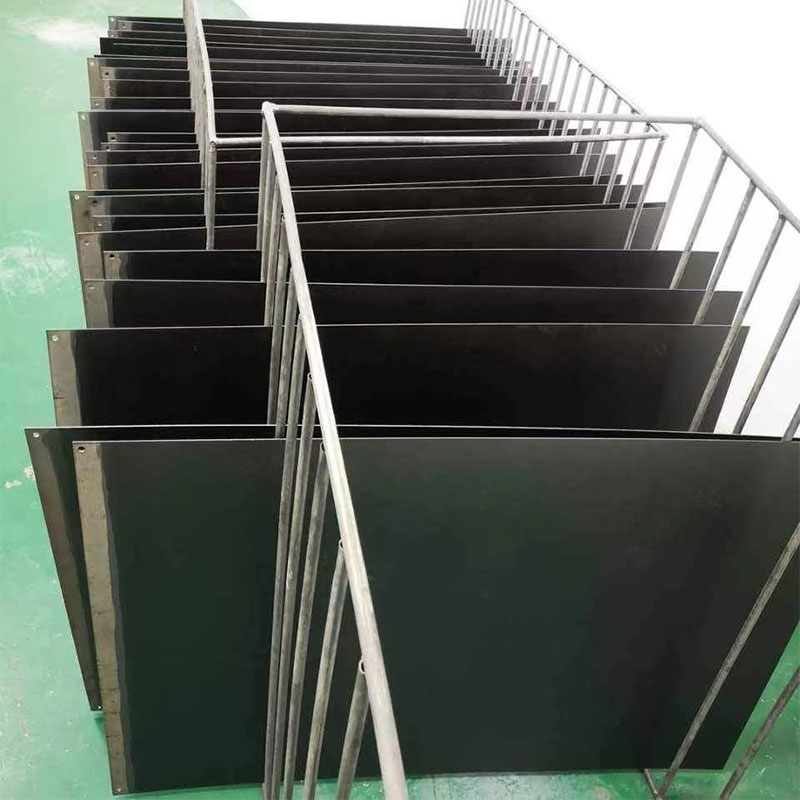
Coated titanium anodes utilize Grade 1 or Grade 2 commercially pure titanium as a substrate, with a surface coating of IrO₂, RuO₂, Pt, or a mixture of metal oxides. Characterized by dimensional stability, high corrosion resistance, and excellent electrocatalytic properties, these anodes serve as critical electrode materials in various precision electroplating applications and auxiliary electrochemical processes.
I. Optimizing Current Distribution: Enhancing Electroplating Results for Complex Workpieces
During electroplating, current density is not distributed uniformly across the surface of a workpiece. Typically, current tends to concentrate on protrusions, edges, and sharp corners, while areas such as deep holes or grooves may experience insufficient current due to electric field shielding.
Such disparities often result in inconsistent plating thickness, which compromises product quality and leads to higher rework rates and increased consumption of precious metals.
Through strategic structural design, coated titanium anodes can help optimize current distribution within an electroplating bath. For instance, by adjusting the distance, relative positioning, and effective surface area between the anode and cathode—and by employing various configurations such as plates, meshes, rods, or tubes—the current path can be effectively optimized.
It should be noted that titanium anodes cannot, on their own, eliminate the "tip effect" (current concentration at sharp points). Achieving uniform plating depends on a combination of factors, including the use of auxiliary anodes, shielding plates, the configuration of the rectifier power supply, and the flow dynamics of the plating solution; therefore, the design must account for the entire electroplating system.
II. Coating Systems: Balancing Electrocatalytic Activity and Structural Stability
Coated titanium anodes typically employ Grade 1 or Grade 2 titanium as a substrate. Following surface pretreatment, an active layer consisting of precious metals or metal oxides is applied to the surface. Common coatings include IrO₂, RuO₂, Pt, and various mixed metal oxides. The choice of coating depends on the specific electrolyte system and anodic reaction, and must be determined based on factors such as bath composition, pH, temperature, and operating current.
Compared to certain soluble anodes, coated titanium anodes offer superior dimensional stability under designed operating conditions. Unlike soluble metal anodes, they do not continuously dissolve to replenish metal ions, which helps minimize anode material consumption and reduces the impact of resulting deposits on the plating bath.
However, the coatings on titanium anodes will gradually degrade over long-term operation; they cannot be considered entirely free of contamination or permanently maintenance-free. Regular inspection of the coating condition, monitoring of cell voltage, and adherence to prescribed maintenance protocols can help extend the service life of the electrodes.
III. Suitability for Precision Electroplating: Enhancing Production Stability
In the electroplating of automotive decorative parts, an optimized anode layout helps improve coating thickness distribution on complex surfaces, reducing the risk of localized "burning" or insufficient plating in recessed areas.
In processes such as gold or nickel plating for electronic connectors, a stable electrochemical environment and well-distributed current help ensure consistent coating quality and minimize the wasteful consumption of precious metal plating materials.
Coated titanium anodes can be customized based on equipment design and workpiece characteristics, making them adaptable to various plating tanks and auxiliary electrode configurations. However, their suitability for specific production methods—such as rack plating, barrel plating, or continuous plating lines—depends on the nature of the anodic reaction and the electrolyte system; not all coatings are appropriate for every electroplating process.
IV. Recycling and Recovery of Spent Coated Titanium Anodes
As electroplating lines continue to operate, some coated titanium anodes may be taken out of service due to coating degradation, reduced activity, or equipment upgrades. Although these spent electrodes no longer meet the original production requirements, their titanium substrates may still retain valuable precious metals—such as RuO₂, IrO₂, or Pt—that can be recovered. Dongguan J&F Precious Metal Trading Co., Ltd. specializes in the recycling of spent coated titanium anodes and precious metal-bearing scrap. This includes ruthenium-iridium coated titanium mesh, platinum-coated titanium plates, MMO (mixed metal oxide) titanium anodes, and other electrode waste containing precious metals.
We provide comprehensive evaluations based on factors such as material specifications, coating types, photographs, quantities, usage history, and analytical test results. Through our professional recycling and processing services, we ensure the effective recovery of titanium and precious metal resources from spent electrodes—helping electroplating enterprises minimize waste and achieve the circular utilization of industrial scrap.