

 8613480627251
In the chlor-alkali industry, on-site sodium hypochlorite generation, and industrial electrolytic chlorine production, anodes are subjected to high chloride ion concentrations, strong oxidizing environments, and elevated temperatures. These conditions impose rigorous requirements on the electrodes regarding corrosion resistance, electrocatalytic activity, and the bond strength of the coating. Coated titanium anodes—also known as Dimensionally Stable Anodes (DSA)—utilize a combination of a titanium metal substrate and a noble metal oxide coating, making them critical components in industrial electrochemical chlorine production systems.
I. Coating Resistance to Delamination: A Determinant of Anode Service Life
During prolonged electrolysis, the coating on an anode surface is subjected to electrochemical reactions, erosion by gas bubbles, temperature fluctuations, and corrosion from the electrolyte. If the coating develops cracks, undergoes localized delamination, or experiences a loss of interfacial bond strength, the electrode's activity may decline; in severe cases, this can even lead to corrosion of the underlying titanium substrate.
Consequently, the service life of a coated titanium anode depends not only on the quality of the titanium substrate but also, crucially, on the coating formulation and the manufacturing process.
Common coating systems consist of composite oxides such as RuO₂, IrO₂, Ta₂O₅, and TiO₂. By adjusting the proportions of these oxides, the coating thickness, and the heat-treatment parameters, it is possible to enhance the electrochemical stability of the coating and its adhesion to the titanium substrate, thereby reducing the risk of delamination during long-term operation.
II. Stability of Chlorine Evolution Overpotential: Impact on System Energy Consumption
In the process of electrolytic chlorine production, the overpotential of the chlorine evolution reaction directly influences the cell voltage and energy consumption. If the catalytic activity of the coating degrades, a higher voltage may be required to maintain the same current, which in turn increases the system's operating costs.
RuO₂ exhibits excellent catalytic activity for chlorine evolution and is a common component in titanium anode coatings. However, under specific operating conditions—such as high current density or strongly acidic environments—the long-term stability of a coating consisting solely of RuO₂ may be limited.
By incorporating components such as IrO₂ and TiO₂ to form a composite metal oxide coating, it is possible to maintain high chlorine evolution activity while simultaneously improving the stability of the electrode. The specific formulation must be designed by taking into account the electrolyte composition, operating temperature, current density, and equipment configuration; the suitability of a coating cannot be determined solely by its name.
III. From the Chlor-Alkali Industry to Diverse Electrochemical Chlorine-Generation Applications
With the growing demand for industrial disinfection, water treatment, and resource recycling, the application of coated titanium anodes has expanded beyond traditional chlor-alkali electrolysis to include in-situ sodium hypochlorite generators, brine electrolysis equipment, and certain systems for the regeneration of acidic etching solutions.
Different applications impose distinct requirements on the electrodes. For instance, in-situ sodium hypochlorite generators typically require electrodes to operate stably in a brine environment, whereas systems for regenerating acidic etching solutions necessitate consideration of how acidity, copper ion concentration, and other impurities affect the electrodes.
Titanium anodes generally utilize Grade 1 or Grade 2 commercially pure titanium as a substrate, with a surface coating consisting of RuO₂, IrO₂, Pt, or other mixed metal oxides (MMO). Depending on equipment requirements, they can be fabricated into various structures, such as meshes, plates, rods, or tubes. Operating temperature, coating formulation, and service life are determined by the specific product design and actual operating conditions.
IV. The Recycling Value of Spent Coated Titanium Anodes
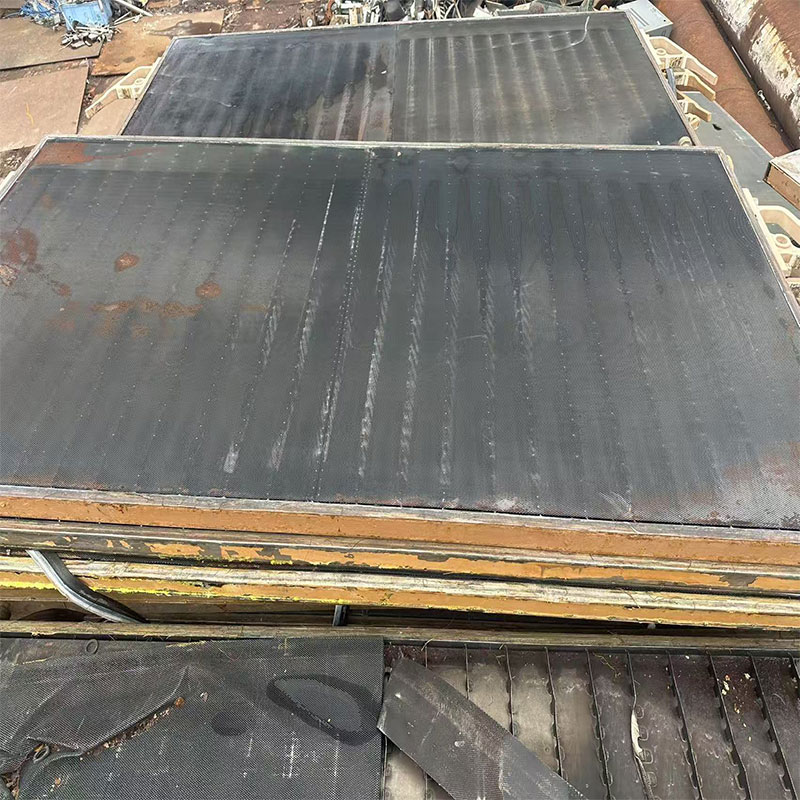
After long-term operation, titanium anodes may require replacement due to coating wear, a decline in catalytic activity, or equipment upgrades. Although such spent electrodes have lost their original functional performance, the titanium substrate and the residual precious metals—such as ruthenium, iridium, and platinum—on the surface retain significant recycling value.
When assessing spent titanium anodes, one cannot rely solely on their appearance or original product specifications to determine their recycling value. Factors such as the specific coating system, duration of use, quantity of residual precious metals, and the electrode structure all influence the actual precious metal content and the final recycling assessment.
Dongguan J&F Precious Metal Trading Co., Ltd. specializes in the recycling of spent coated titanium anodes and precious metal scrap, including ruthenium-iridium-coated titanium anodes, iridium-tantalum-coated titanium meshes, platinum-coated titanium plates, and other types of MMO titanium electrode waste. A preliminary assessment can be conducted based on the photos, specifications, quantities, and material information provided by the client; a final recycling plan is then determined by incorporating the results of actual testing.
As industrial electrolysis equipment continues to be upgraded, the standardized recycling of spent titanium anodes not only helps reduce the waste of precious metal resources but also enables enterprises to unlock the value of their decommissioned electrode assets, facilitating the circular use of resources.