

 8613480627251
During the PCB manufacturing process, the etching stage generates waste solutions containing high concentrations of dissolved copper ions. Without an effective copper recovery system, valuable metal resources are wasted, and the costs—as well as the environmental burden—associated with waste treatment increase. Consequently, an growing number of PCB manufacturers are adopting electrolytic recovery technology to extract copper from etching waste solutions, thereby enabling resource recycling.
I. The Importance of Copper Recovery in PCB Etching
In the PCB etching process, the etching solution continuously dissolves copper from the surface of the circuit board. As the concentration of copper ions rises, the performance of the etching solution and the production process itself can be compromised; this necessitates proper bath management and the use of copper recovery equipment.
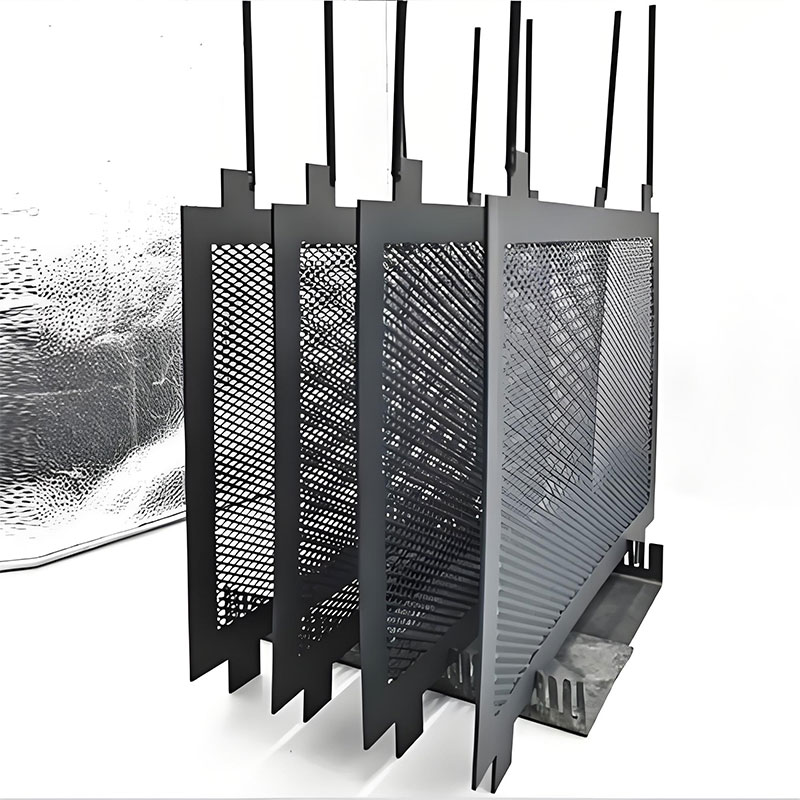
An electrolytic copper recovery system reduces copper ions present in the waste solution, causing them to deposit as metallic copper on the surface of the cathode. This process allows companies to reclaim valuable copper resources and reduce the volume of waste requiring treatment. Furthermore, under appropriate operating conditions, it can extend the service life of the etching solution, thereby lowering costs related to raw materials and environmental compliance.
II. Working Principle of Titanium Anodes for Copper Recovery
Titanium anodes used for copper recovery consist of a titanium substrate coated with a functional metal oxide layer; a common example is the MMO (Mixed Metal Oxide) coated titanium anode.
During electrolysis, the titanium anode serves to conduct electricity and facilitate anodic oxidation reactions, while the cathode provides an interface for the reduction and deposition of copper ions. When a direct current (DC) is applied, copper ions in the solution gain electrons at the cathode, gradually forming metallic copper that deposits onto the cathode surface.
Unlike consumable anodes, dimensionally stable titanium-based anodes do not continuously dissolve during normal operation—unlike soluble metal anodes—because their surface coating is designed primarily to provide electrocatalytic activity. The composition of the coating and the quality of its application directly influence the electrode's performance and service life.
III. Advantages of MMO Titanium Anodes in PCB Copper Recovery
1. Excellent Corrosion Resistance
PCB etching solutions can be highly corrosive, depending on the specific etching system and its chemical composition. The application of an appropriate MMO (Mixed Metal Oxide) coating enhances the stability of titanium anodes in specific electrolytic environments, thereby reducing the risk of corrosion to the substrate.
2. Stable Electrochemical Performance
A high-quality coating provides relatively stable electrocatalytic activity, which helps maintain consistent anodic reactions and current distribution. When combined with an optimized cathode structure and appropriate electrolysis parameters, this improves the stability of the copper recovery process.
3. Extended Service Life
Compared to some traditional anode materials, MMO-coated titanium anodes offer superior durability under suitable operating conditions, helping to lower maintenance costs associated with frequent anode replacement. However, the actual service life depends on factors such as electrolyte composition, current density, temperature, and operational management.
4. Flexible Structural Customization
Titanium anodes can be designed in various configurations—such as mesh, plate, expanded mesh, or tubular structures—tailored to the dimensions of the electrolytic cell, installation requirements, and current density specifications, ensuring compatibility with different PCB copper recovery systems.
IV. Key Components of a PCB Electrolytic Copper Recovery System
A typical electrolytic copper recovery system generally consists of an electrolytic cell, MMO-coated titanium anodes, cathodes, a DC power supply, and a circulation/filtration unit.
Once the copper-bearing etchant enters the electrolytic cell, the application of direct current (DC) causes copper ions to migrate toward the cathode, where they undergo a reduction reaction and gradually deposit as metallic copper. Once a sufficient amount has been deposited, the cathode can be removed to collect and process the recovered copper.
V. How to Select the Right Titanium Anode?
When selecting a titanium anode for PCB copper recovery, the following factors should be carefully considered:
- Electrolyte Composition: Choose an appropriate coating system based on the specific chemical components—such as chlorides and sulfates—rather than relying solely on a simple classification of "acidic" or "alkaline."
- Operating Current Density: Select electrode specifications that align with the equipment's design parameters to avoid long-term operation under overload conditions.
- Electrode Structure: Consider factors such as the dimensions of the electrolytic cell, electrolyte flow, current distribution, and the requirements for cathodic deposition.
- Coating Quality: Evaluate the uniformity of the coating, its adhesion, electrochemical performance, and the manufacturing process employed. - Equipment Configuration: Integrate the anodes and cathodes with the rectifier power supply, circulation system, and filtration unit.
VI. Application Value and Resource Recycling
For manufacturers of multilayer PCBs, HDI (High-Density Interconnect) boards, and flexible PCBs, the electrolytic recovery of copper not only reduces the loss of copper resources but also helps optimize waste-liquid management and production costs.
It should be noted that chemical properties vary significantly across different types of etching solutions. Therefore, the selection of anodes and the design of recovery processes must be tailored to specific process conditions—such as the composition of the solution and the existing equipment—rather than applying a standardized set of parameters universally.
Conclusion: MMO-coated titanium anodes are a critical component in systems for the electrolytic recovery of copper from PCB etching solutions. By carefully selecting the coating type, electrode structure, and operating parameters, one can enhance the stability of the electrolytic process, facilitate the recovery and reuse of copper resources, and achieve both economic and environmental benefits.