

 8613480627251
In the chlor-alkali industry, ion-exchange membrane electrolysis has become the dominant production process, widely used for the manufacture of caustic soda, chlorine, and hydrogen. As the industry places increasing emphasis on energy conservation, consumption reduction, and production efficiency, the performance of key components within electrolytic cells has garnered significant attention. Among these, the anode material directly influences the efficiency of the chlorine evolution reaction, cell voltage, and long-term operational costs. Titanium-based electrodes—also known as Dimensionally Stable Anodes (DSA)—have become essential components in modern chlor-alkali electrolysis systems due to their excellent electrocatalytic properties and structural stability.
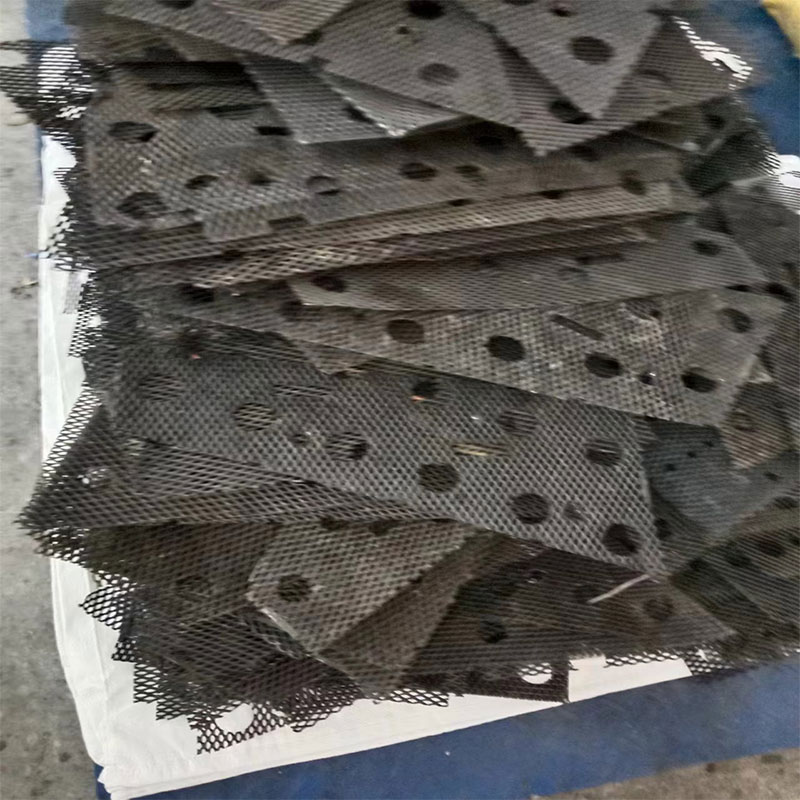
I. Titanium Substrate and Noble Metal Oxide Coatings
Titanium-based electrodes typically utilize commercially pure titanium (conforming to ASTM B265 standards, such as grades Gr1 or Gr2) as a substrate. Titanium offers superior mechanical strength and corrosion resistance, providing a stable structural foundation for the electrode under the specific operating conditions of a chlor-alkali anode.
The application of a noble metal oxide coating onto the titanium substrate—often achieved through processes like thermal decomposition—is the key to enabling the electrode's electrocatalytic functionality. Common coating systems are based on metal oxides such as ruthenium dioxide ($RuO_2$) or iridium dioxide ($IrO_2$); alternatively, mixed metal oxide (MMO) formulations can be employed to meet specific application requirements.
These functional coatings provide active reaction sites, enhance the electrode's chlorine evolution performance, and reduce the overpotential required for the chlorine evolution reaction, thereby improving the energy efficiency of the electrolysis process.
II. Electrocatalytic Performance and Its Role in Reducing Cell Voltage
In an ion-exchange membrane electrolytic cell, cell voltage is influenced by several factors, including the theoretical decomposition voltage, the resistance of the membrane and electrolyte, contact resistance, and electrode overpotential. Among these, the anode chlorine evolution overpotential is a critical factor affecting energy consumption.
By optimizing the composition and microstructure of their coatings, Dimensionally Stable Anodes enhance the electrocatalytic activity for the chlorine evolution reaction, allowing the process to occur at a relatively lower overpotential. Under similar operating conditions, a reduction in anode overpotential helps lower the cell voltage of an electrolyzer, thereby decreasing the power consumption per unit of product.
For large-scale, continuously operating chlor-alkali production lines, even a modest decrease in cell voltage can yield significant energy savings over the long term. Consequently, the catalytic activity and stability of the anode coating are of great importance for companies looking to control production costs.
III. Dimensional Stability Enhances Long-Term Operational Efficiency
Traditional graphite anodes undergo gradual oxidative consumption during long-term electrolysis, which alters the electrode dimensions and the inter-electrode gap, subsequently affecting the operating state of the electrolyzer.
In contrast, titanium-based dimensionally stable anodes (DSAs) offer superior structural stability. Under normal operating conditions, the substrate is not continuously consumed like graphite; instead, any primary performance changes stem solely from the gradual wear of the functional surface coating.
This structural characteristic helps maintain a consistent electrode shape and inter-electrode gap, reducing the need for equipment adjustments caused by electrode consumption. Furthermore, an optimized electrode structure and stable current distribution contribute to consistent long-term performance of the electrolyzer.
IV. Reducing Maintenance and Overall Operating Costs
For chlor-alkali enterprises, the value of an anode is determined not only by its initial electrocatalytic performance but also by its operational behavior throughout its entire service life.
High-quality coatings maintain relatively stable catalytic activity under appropriate operating conditions, delaying performance degradation and reducing the costs associated with frequent replacements and maintenance. Additionally, a stable cell voltage and consistent current distribution allow companies to develop more effective equipment maintenance schedules and production cost budgets.
Conclusion: By combining a titanium substrate with a noble metal oxide coating, titanium-based electrolytic anodes achieve excellent catalytic performance for chlorine evolution and high dimensional stability, making them highly valuable in modern chlor-alkali ion-exchange membrane electrolysis processes. Their actual energy-saving potential and service life depend on factors such as the coating formulation, electrolyte quality, current density, and operating temperature. For chlor-alkali enterprises, selecting the appropriate titanium anode for specific operating conditions—and ensuring proper routine maintenance—is a critical step toward improving production efficiency and lowering overall operating costs.