

 8613480627251
In sectors such as industrial wastewater treatment, petrochemicals, and offshore engineering, metal corrosion remains a critical factor affecting both equipment safety and production efficiency. Pipelines, storage tanks, reactors, and electrolytic equipment—frequently exposed to acidic or alkaline solutions, high-salinity wastewater, or seawater—are highly susceptible to electrochemical corrosion. This leads to issues such as equipment degradation, leaks, and the need for downtime for repairs, all of which drive up operational costs.
Traditional anti-corrosion methods include the application of protective coatings, the use of corrosion-resistant alloys, and sacrificial anode protection. As industrial equipment increasingly demands long-term stability and efficient maintenance, Impressed Current Cathodic Protection (ICCP) has gained significant attention. Within this system, titanium-based anodes coated with noble metal oxides have emerged as a vital type of auxiliary anode, prized for their excellent electrochemical performance, dimensional stability, and low consumption rate.
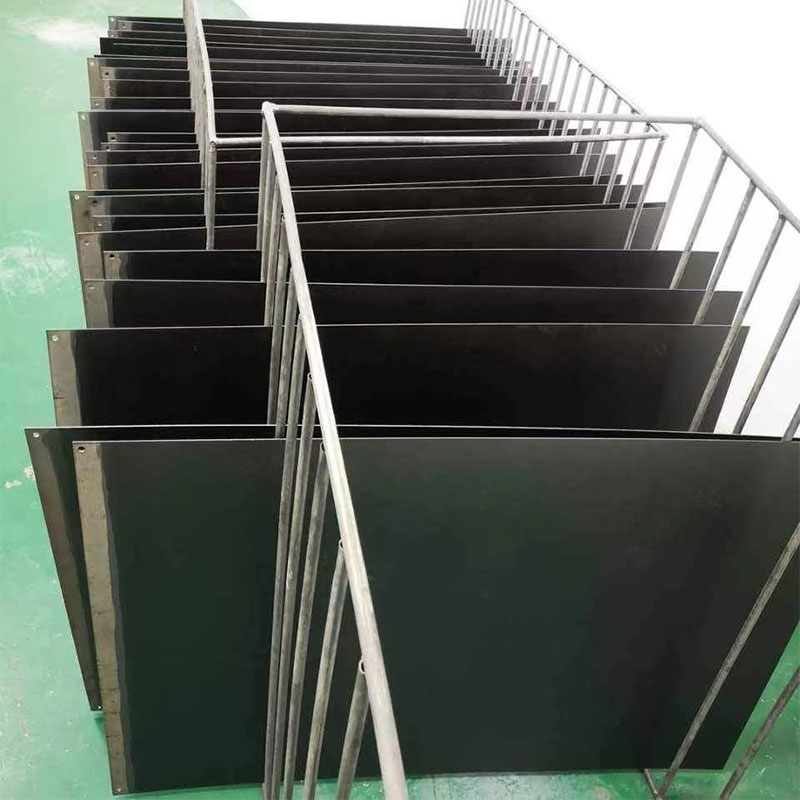
I. Working Principle of Titanium Anodes in Electrochemical Anti-Corrosion
A primary application of titanium anodes in industrial anti-corrosion is the Impressed Current Cathodic Protection (ICCP) system. This technology utilizes an external DC power source to supply current to an auxiliary anode; the current is then transmitted through an electrolyte to the metal structure requiring protection. This shifts the surface potential of the metal toward a more negative value, thereby inhibiting anodic dissolution—the process responsible for metal corrosion—and effectively slowing down the rate of corrosion.
In such systems, titanium anodes typically consist of an industrial-grade pure titanium substrate coated with oxides of noble metals, such as ruthenium or iridium. The titanium substrate provides electrical conductivity and structural support, while the surface coating delivers the necessary electrocatalytic activity, ensuring that the anode can consistently output the required protective current under specified operating conditions.
Unlike sacrificial anodes, which protect equipment by gradually dissolving themselves, titanium anodes in an ICCP system function as auxiliary anodes; they do not rely on their own dissolution to provide protection. They maintain excellent dimensional stability under appropriate current densities and electrolyte conditions, resulting in minimal material consumption and facilitating long-term, reliable operation.
II. Technical Advantages of Titanium-Based Noble Metal Oxide Coatings
The core value of a titanium anode stems not only from its titanium substrate but also, crucially, from the noble metal oxide coating applied to its surface. Common coating systems include ruthenium-based, iridium-based, and other mixed metal oxide (MMO) coatings; different formulations correspond to specific electrochemical properties and application environments.
In impressed current cathodic protection (ICCP) systems, anodes are typically required to facilitate electrochemical reactions, such as the oxygen evolution reaction. An appropriate catalytic coating enhances anode reaction kinetics, reduces the overpotential of these reactions, and helps the system maintain a stable current output.
Furthermore, the titanium substrate offers excellent corrosion resistance and mechanical strength, providing a stable foundation for the coating. The combination of the substrate and the coating grants titanium anodes both structural reliability and electrochemical activity, making them well-suited for industrial anti-corrosion systems that require long-term operation.
It should be noted that the service life of a titanium anode varies depending on the corrosive environment. Actual performance is influenced by several factors, including the type of coating, current density, temperature, electrolyte composition, and installation conditions.
III. The Value of Titanium Anodes in Industrial Wastewater Anti-Corrosion
Industrial wastewater treatment facilities often contain extensive networks of carbon steel piping, storage tanks, and reaction equipment. Some of these components are frequently exposed to acidic, alkaline, or chloride-ion-containing wastewater, posing a high risk of corrosion. A well-designed impressed current cathodic protection (ICCP) system can provide continuous electrochemical protection for critical metal structures.
1. Extending Equipment Service Life
By using an external power source to regulate the protective current, the metal structure being protected is maintained within an optimal cathodic protection potential range. This effectively lowers the corrosion rate, thereby reducing issues such as pipe perforations, tank leaks, and structural damage. Titanium-based coated anodes exhibit superior dimensional stability, which supports the long-term, reliable operation of the system.
2. Reducing Equipment Maintenance Costs
Unlike traditional sacrificial anodes—which require periodic inspection and replacement as the material is consumed—titanium anodes used in ICCP systems experience minimal consumption under designed operating conditions. This reduces the frequency of anode replacement and the associated maintenance workload.
For large-scale wastewater treatment plants, chemical industrial parks, and continuous-production facilities, reducing the frequency of equipment overhauls helps minimize economic losses caused by unplanned downtime. 3. Improving the Stability of Protective Current Output
Titanium-based noble metal oxide coatings provide a stable interface for electrochemical reactions. When a system is properly designed and installed, these coatings help maintain a consistent protective current output. In conjunction with reference electrodes and control equipment, they enable the monitoring and adjustment of the protective potential.
4. Reducing the Risk of Anode Material Loss
Unlike sacrificial anodes—such as those made of aluminum or zinc—which function by dissolving themselves, titanium-based dimensionally stable anodes (DSAs) facilitate current transfer primarily through surface electrochemical reactions. This significantly reduces the maintenance requirements associated with the continuous consumption of anode material. Nevertheless, as the coatings are subject to electrochemical stress and environmental operating conditions, regular inspection is still necessary.
IV. Key Industrial Applications of Titanium Anodes
With the advancement of electrochemical corrosion protection technology, titanium-based coated anodes have found applications across various industrial sectors:
- Industrial Wastewater Treatment: Used for the impressed current cathodic protection (ICCP) of storage tanks, pipelines, and metal structures.
- Petrochemical Industry: Provides cathodic protection for buried pipelines, storage tanks, and other metal infrastructure.
- Marine Engineering: Utilized in anti-corrosion systems for offshore platforms, seawater pipelines, and various marine metal structures.
- Electrolysis and Chemical Processing Equipment: Employed in specific electrochemical devices and as auxiliary anode systems, depending on operational requirements.
- Port and Marine Vessel Facilities: Integrated into cathodic protection systems to mitigate the risk of corrosion for metal structures in seawater environments.
Because different application scenarios impose varying requirements on anode structure, coating composition, current output, and service life, professional selection is essential—based on factors such as equipment material, the surrounding medium, and the surface area requiring protection.
V. Recycling of Titanium Anodes Scrap and Recovery of Noble Metals
As titanium-based coated anodes continue to be used across industrial sectors, the maintenance and replacement of equipment inevitably generate a quantity of spent titanium anodes—including MMO-coated titanium mesh, plates, and tubes.
Even when such electrodes have lost their original electrochemical performance, their surfaces may still retain residues of noble metals—such as ruthenium, iridium, or platinum—giving them significant recycling value. For spent titanium anodes, the assessment for recycling typically focuses on the following aspects:
- Substrate type: Titanium mesh, plates, tubes, or other titanium-based structures.
- Coating composition: Presence of precious metals such as ruthenium, iridium, or platinum.
- Residual coating condition: Service life, surface wear, and the integrity of the remaining coating.
- Material quantity: Actual weight, specifications, and batch details.
- Testing results: Sampling and analysis of precious metal content based on material characteristics.
Dongguan J&F Precious Metal Trading Co., Ltd. specializes in the recycling and trading of industrial waste containing precious metals. We handle spent titanium anodes, MMO/DSA-coated titanium mesh, titanium plates, and other industrial electrode scrap containing precious metals like ruthenium, iridium, and platinum. Enterprises looking to dispose of such materials may provide photos, source information, quantities, and specifications to facilitate an initial assessment.
VI. Titanium Anodes Drive the Continued Development of Industrial Anti-Corrosion Technology
Overall, the value of titanium anodes in the field of electrochemical anti-corrosion lies not only in the inherent corrosion resistance of the material itself but also in its ability to serve as a stable and reliable auxiliary anode for impressed current cathodic protection (ICCP) systems.
By properly designing anode coatings, optimizing current output, and monitoring protective potential, enterprises can effectively mitigate the risk of corrosion in metal equipment, reduce maintenance costs, and enhance the operational reliability of industrial facilities.
Furthermore, the precious metal coatings remaining on spent titanium anodes possess significant resource recovery value. Integrating the application of titanium anodes and equipment maintenance with the recycling of spent electrodes helps improve the efficiency of precious metal resource utilization, steering the industrial anti-corrosion and metal recycling sectors toward a more economical, environmentally friendly, and sustainable future.