

 8613480627251
In the electrolysis disinfection system, the titanium anode is the core component that determines the electrolysis efficiency and ensures the stable operation of the equipment. The MMO mixed metal oxide coating is the key technology to achieve efficient chlorine evolution reaction. Today, electrolytic disinfection titanium anodes equipped with MMO coating have become the mainstream choice in the industry for water treatment, hospital sewage disinfection, hypochlorous acid generators and other scenarios.
1. What is MMO coating?
MMO is the abbreviation of mixed metal oxide. The coating developed specifically for electrolytic sterilization of titanium anodes uses precious metal oxides such as ruthenium and iridium as core components. Through multiple coatings + high-temperature thermal decomposition and sintering processes, a uniform, dense and stable electrocatalytic layer is formed on the surface of the titanium substrate.
It not only provides sufficient catalytic active sites for the electrolysis reaction, but also isolates the high chlorine medium from corroding the titanium matrix. The quality of the coating directly determines the performance and service life of the titanium anode.
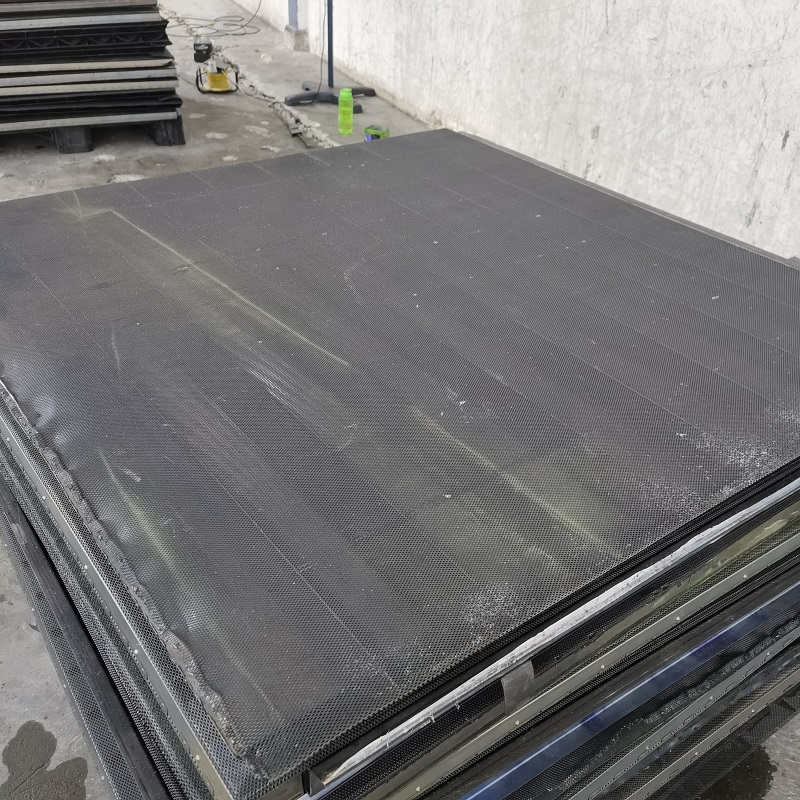
2. Four core values of MMO coating
Efficiency improvement: The excellent chlorine evolution catalytic activity reduces the reaction overpotential and generates effective chlorine faster under the same current density, directly improving the sterilization efficiency of the entire system.
Cost reduction: The low reaction potential reduces the ineffective energy consumption of the electrolysis process, and the long-term operation of the water treatment system can significantly dilute the cost of electricity.
Corrosion Resistance: Maintain chemical stability in highly corrosive environments with high salt and high chlorine, and avoid the common problems of passivation and rapid corrosion failure of ordinary electrodes.
Longevity: The coating has strong adhesion, is resistant to erosion and wear, and has a service life of up to 3-8 years under normal working conditions. It is far superior to graphite electrodes and ordinary metal electrodes, and greatly reduces the frequency of equipment maintenance.
3. Key points of process and selection
The performance of MMO coatings completely depends on process control. The standard process needs to cover the entire process of sand blasting and activation of titanium substrates, precise preparation of precious metal solutions, multiple layered coatings and sintering, and complete electrochemical inspection of finished products. Any missing process will directly affect the life of the electrode.
When selecting, focus on confirming five core indicators: special MMO coating formula, mature multiple sintering process, complete electrochemical detection capabilities, non-standard customization capabilities, and stable mass production capabilities. Priority is given to professional manufacturers to obtain selection solutions that suit their own working conditions.
Complete recycling process for MMO titanium anodes
MMO titanium anodes that have reached the end of their service life are not completely scrapped. The remaining precious metals such as ruthenium and iridium in the titanium matrix and coating have extremely high recycling value. The whole process can be divided into four core stages:
Pretreatment stage: First physically dismantle the used anode, and separate the main body of the titanium plate from the conductive rods, seals and other ancillary components by shearing and cutting to remove scale and salt deposits attached to the surface to prevent impurities from being mixed into the subsequent purification process.
Coating peeling stage: The mainstream in the industry adopts the high-temperature oxidation quenching method. The used anode is placed in a high-temperature furnace for heating and rapid cooling, so that the MMO coating cracks and falls off the surface of the titanium substrate due to thermal expansion and contraction. The coating peeling efficiency can reach more than 95%, while maximizing the avoidance of strong acid corrosion damage to the titanium substrate. For small-batch high-precision recycling scenarios, the sulfuric acid electrolysis reverse process can also be used to gradually peel off the coating in a low-corrosion environment.
Precious metal purification stage: Collect the stripped coating debris, and gradually separate and purify precious metals such as ruthenium and iridium through multiple processes such as acid leaching, ion exchange resin adsorption, and selective extraction. Finally, precious metal salts or metal powders with a purity of more than 99.9% are obtained, which can be directly reused in the preparation of coating solutions for MMO coatings.
Titanium substrate regeneration stage: After the coating is peeled off, the titanium substrate undergoes vacuum dehydrogenation, surface pickling and activation treatment, and the oxygen content and mechanical properties are tested. The titanium material in good condition can be directly returned to the electrode production process to be re-coated with a new MMO coating, and its performance is close to that of the new substrate. The titanium material with slight embrittlement damage can be remelted in a vacuum arc furnace to make qualified titanium ingots, and then processed into a new titanium anode substrate.
The entire recycling process can not only significantly reduce the overall cost of enterprise electrode renewal, but also reduce the high energy consumption and carbon emissions of primary titanium smelting and precious metal mining processes, achieving closed-loop recycling of resources. At present, domestic environmental protection requirements continue to upgrade, and the application scenarios of electrolytic disinfection technology are still expanding. MMO coating, as the core technology of titanium anodes, is the core guarantee for the high efficiency, low consumption, and long-term stable operation of the entire disinfection system.