

 8613480627251
In the modern electrochemical industrial system, the ruthenium-based coated titanium anode (RuO₂-TiO₂/Ti anode) is a widely used DSA dimensionally stable anode. This electrode utilizes titanium as its substrate and is coated with a composite oxide layer of ruthenium dioxide and titanium dioxide. Among them, ruthenium dioxide (RuO₂) possesses multiple advantages such as good stability, high electrocatalytic activity, strong corrosion resistance, and controllable cost. It is widely used in industrial water electrolysis, impressed current cathodic protection, and electrochemical scale removal in circulating water systems, and is a mainstream electrode product in the fields of water electrolysis treatment and anti-corrosion engineering.
The ruthenium-based coated titanium anode is prepared through a thermal decomposition process. The precursor solution of ruthenium and titanium is coated onto the surface of the titanium substrate that has undergone roughening treatment, and then sintered at high temperatures to form a tightly bonded mixed metal oxide catalytic layer. Compared to traditional electrodes such as graphite anodes and lead anodes, the ruthenium-based titanium anode exhibits a lower chlorine evolution potential, lower energy consumption for electrolysis, and outstanding stability in chloride-containing water environments. The titanium substrate itself is corrosion-resistant and resistant to deformation, ensuring overall dimensional stability of the electrode. During operation, it does not produce secondary pollutants such as lead and graphite debris, making it suitable for long-term continuous industrial production. Furthermore, compared to high-cost coated anodes such as ruthenium-iridium and iridium-tantalum, the ruthenium-based formulation uses less precious metal, offering a significant cost-performance advantage. It is suitable for large-scale, normalized electrolysis projects.
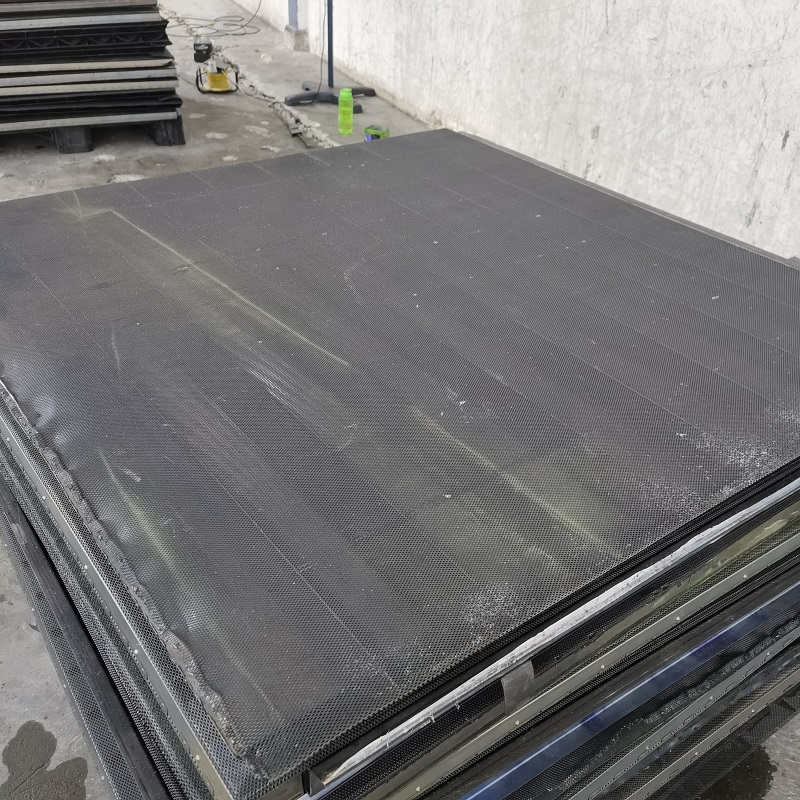
Industrial water electrolysis is the core application direction of ruthenium-based coated titanium anodes, which are predominantly used in sodium hypochlorite generators, seawater electrolysis, circulating water electrolysis for sterilization, and small-scale electrolytic chlorine production equipment. Under energized conditions, the anode efficiently catalyzes the conversion of chloride ions into hypochlorous acid, achieving sterilization and algaecide of water bodies. It is widely used in municipal reclaimed water, swimming pool water, marine aquaculture, sewage disinfection, and other scenarios. The entire equipment has a high degree of automation, with chemicals being used immediately after production, eliminating the need to store hazardous chemicals. It is highly recognized in the fields of water supply safety, aquaculture, and industrial circulating water sterilization.
Impressed current cathodic protection is another mature field for ruthenium-titanium anodes. Pipelines, storage tanks, dock steel structures, cross-sea pile foundations, and reinforced concrete structures, when buried underground or immersed in seawater or soil for a long time, are prone to electrochemical corrosion. As an auxiliary anode, ruthenium-based titanium anodes can continuously output stable current, reduce the corrosion potential of metal components, and delay rust damage. They are resistant to erosion by soil, seawater, and saline-alkali media, have a long service life, and can be made into various shapes such as tubular, mesh, and rod shapes, suitable for long-term anti-corrosion projects in long-distance oil and gas pipelines, offshore platforms, and storage tank areas.
In circulating cooling water systems, electrochemical scale removal is also an important application of ruthenium-based titanium anodes. Industrial cooling water, after long-term circulation and concentration, is prone to the precipitation of calcium and magnesium ions, which can form scale, block heat exchangers and pipelines, and reduce heat transfer efficiency. By adopting the electrochemical scale removal process using ruthenium-coated titanium anodes, there is no need for continuous addition of scale inhibitors. This process relies on electrochemical reactions to alter the ionic form of water, inhibiting the crystallization and adhesion of calcium carbonate and magnesium carbonate. Simultaneously, it also exhibits bactericidal and corrosion-inhibiting effects, helping enterprises reduce chemical agent usage and lower operation and maintenance costs. This aligns with the development direction of green treatment for circulating water.
With the green and low-carbon development of the industry, the recycling system for waste ruthenium-based titanium anodes has gradually improved. For ruthenium-titanium anodes that have reached their service life, the titanium substrate can still be reused through secondary processing, and the ruthenium remaining in the coating is a scarce precious metal that can be stripped, purified, and regenerated through professional processes. Enterprises' centralized recycling of scrapped anodes not only avoids the pressure of solid waste disposal but also recovers precious metal resources, reduces subsequent procurement costs for new electrodes, and forms a sustainable resource recycling model.
Overall, the RuO₂-TiO₂/Ti ruthenium-based coating titanium anode combines catalytic performance, corrosion resistance, and cost-effectiveness, making it suitable for a wide range of chemical applications such as electrolytic chlorine production, cathodic protection, and electrochemical descaling. With the continuous popularization of electrochemical technology, ruthenium-based titanium anodes will continue to be promoted in more water treatment, corrosion prevention, and electrolysis sub-sectors, providing a reliable electrode solution for industrial cost reduction and environmental protection efficiency improvement.