

 8613480627251
In the electrolysis process of industrial water treatment, the ruthenium-based coated titanium anode (RuO₂-TiO₂/Ti anode) is the most widely used DSA dimensionally stable anode. This anode is made of pure titanium as the substrate, with a composite oxide coating of ruthenium dioxide and titanium dioxide sintered on its surface through a high-temperature thermal decomposition process. Ruthenium dioxide (RuO₂) exhibits excellent electrocatalytic activity, low chlorine evolution potential, and corrosion resistance. When combined with titanium dioxide, the coating exhibits stronger bonding strength, controllable noble metal usage, and outstanding comprehensive cost advantages. It has become the core electrode component in industrial electrolysis water processes involving salt-containing systems, widely used in on-site electrolysis chlorine production, circulating water electrolysis, seawater electrolysis, acidic electrolysis water preparation, and other scenarios.
The core advantage of ruthenium-based coated titanium anodes lies in their excellent catalytic selectivity for chlorine evolution. During the electrolysis of water containing chloride ions, the anode can preferentially catalyze the conversion of chloride ions into chlorine gas, which dissolves in water to generate hypochlorous acid and hypochlorite, achieving sterilization and algaecide of the water body. At the same time, it effectively inhibits the side reaction of oxygen evolution, improves current efficiency, and reduces electrolysis energy consumption. Compared to traditional graphite anodes and lead anodes, ruthenium-based titanium anodes do not leach out heavy metals, thus avoiding secondary pollution. The titanium substrate is resistant to erosion by saltwater, seawater, and weak corrosive media, and the electrode size is stable. It is not prone to deformation or passivation during long-term continuous operation, making it suitable for 24-hour uninterrupted operation in industrial sites. At the same time, the anode can be processed into various forms such as plates, meshes, and tubes according to equipment requirements, adapting to different specifications of electrolytic cells and sodium hypochlorite generators.
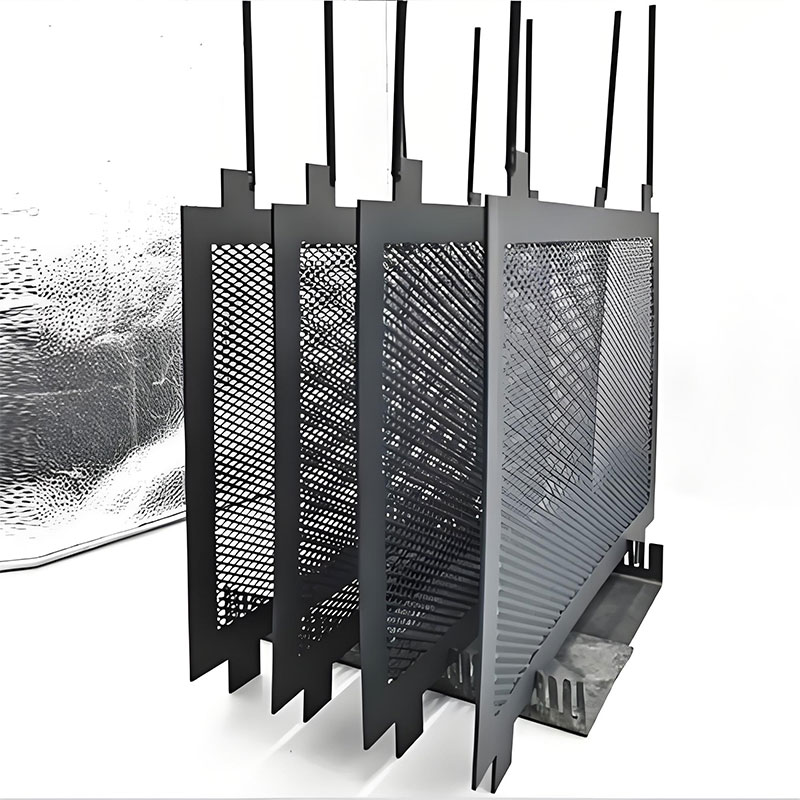
On-site electrolytic preparation of sodium hypochlorite is the most mainstream application direction of ruthenium-based coated titanium anodes in industrial water electrolysis. Enterprises adopt on-site electrolysis with dilute saltwater to produce sodium hypochlorite disinfectant as needed, eliminating the need to purchase, transport, and store liquid chlorine and finished sodium hypochlorite, thus avoiding the risks associated with the storage and transportation of hazardous chemicals. In municipal sewage plants, hospital wastewater treatment, water reuse in chemical industrial parks, and water disinfection projects in waterworks, sodium hypochlorite generators equipped with ruthenium-based titanium anodes continuously produce effective chlorine with stable concentration, killing bacteria, viruses, and algae in water and ensuring that the microbial indicators of effluent meet standards.
The field of seawater electrolysis also heavily utilizes ruthenium-based coated titanium anodes. Due to the high chloride ion content and strong corrosivity of seawater, ordinary electrodes are prone to rapid failure. Ruthenium-based titanium anodes are resistant to seawater corrosion and exhibit stable catalytic efficiency, making them widely used in electrolytic treatment of ship ballast water, disinfection of aquaculture water, and sterilization of water supply on offshore platforms. By electrolyzing seawater to generate active chlorine, these anodes kill plankton and microorganisms in seawater, prevent the invasion of alien species, and meet the requirements of maritime ballast water management regulations.
Industrial circulating cooling water systems are also important application scenarios. In the chemical, power, and metallurgical industries, long-term concentration of circulating water leads to the growth of bacteria, algae, and biological slime, which can easily clog heat exchanger tubes and reduce heat transfer efficiency. The use of ruthenium-coated titanium anode electrolysis technology allows for online electrolytic sterilization of circulating water, reducing the dosage of traditional oxidizing bactericides and non-oxidizing agents, lowering the cost of chemical procurement and waste liquid treatment, and facilitating green operation and maintenance of circulating water systems. In addition, ruthenium-coated titanium anodes are also used in the preparation of slightly acidic electrolyzed water, and the produced hypochlorous acid water can be used for disinfection and sterilization in food factories and pharmaceutical workshops.
In terms of operation and maintenance as well as resource recycling, ruthenium-based coated titanium anodes possess recyclable value. After reaching their service life, the titanium substrate can be cleaned, re-ground, and re-coated for reuse. The ruthenium in the coating is a scarce precious metal that can be recovered and purified through professional hydrometallurgical processes, and then reused in the production of new electrodes, reducing the cost of consumables for enterprises and forming a green recycling model.
Overall, the ruthenium-based coated titanium anode is suitable for industrial water electrolysis conditions in salt-containing systems, combining characteristics such as high-efficiency catalysis, corrosion resistance and stability, and controllable cost. With the continuous growth of domestic demand for industrial water treatment and on-site disinfection, and the increasing popularity of low-energy, safe on-site electrolysis technology, the RuO₂-TiO₂/Ti ruthenium-based titanium anode will continue to play an important role in the industrial water electrolysis industry, providing a reliable electrode solution for industrial water disinfection and water quality stabilization.