

 8613480627251
In the field of industrial wastewater treatment, dye wastewater, chemical tail water, and pharmaceutical and pesticide residual wastewater exhibit complex pollutant structures and poor biodegradability, making it challenging to achieve standard treatment relying solely on traditional biochemical processes. MMO anodes, particularly those coated with ruthenium and iridium precious metal oxides, have garnered widespread industry attention in the field of organic pollutant degradation due to their excellent conductivity, strong corrosion resistance, and outstanding electrocatalytic activity. They have become the core electrode material in electrochemical oxidation wastewater treatment processes.
The MMO anode typically utilizes titanium as its substrate, with a surface coated thermally with a catalytic layer of ruthenium-iridium composite precious metal oxides. The synergistic combination of ruthenium and iridium oxides significantly reduces the reaction overpotential, enabling the efficient generation of strong oxidizing substances such as hydroxyl radicals and active chlorine after electrification. These substances directly or indirectly oxidize and decompose large organic pollutants in water, disrupting dye chromophores and breaking benzene ring structures, thus achieving significant decolorization and COD reduction effects on dye wastewater. Compared to traditional anodes such as graphite and lead alloys, the ruthenium-iridium MMO anode offers advantages such as dimensional stability, strong coating adhesion, resistance to passivation, and a longer service life. It is suitable for complex wastewater conditions with high salt content and strong corrosion, exhibiting stable performance in long-term continuous operation and lower operation and maintenance costs.
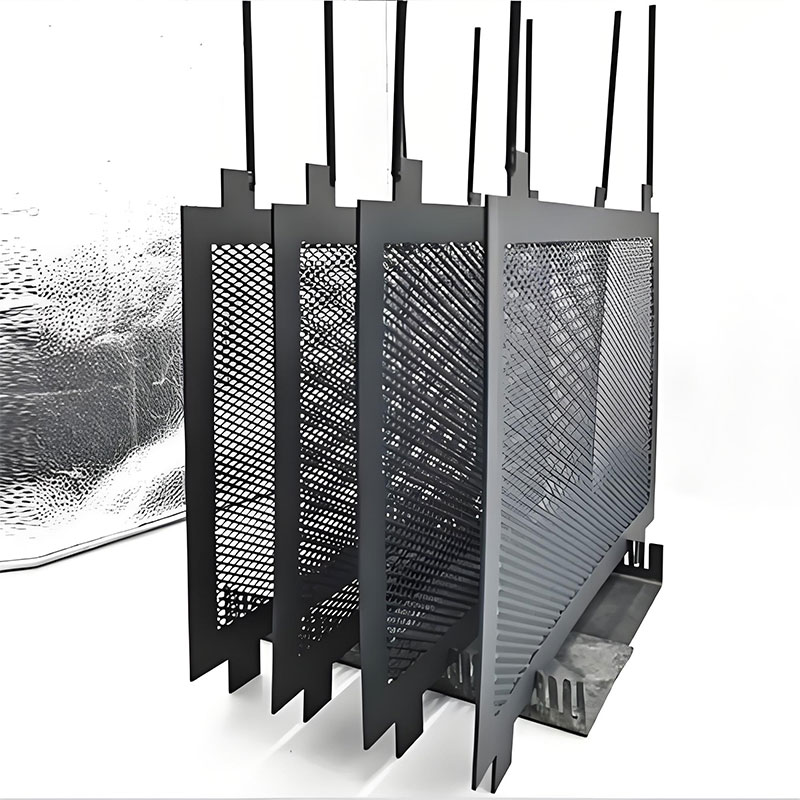
In practical engineering applications, ruthenium-iridium (Ru-Ir) coated MMO anodes have a wide range of applicable scenarios. The dye wastewater in the printing and dyeing industry is characterized by high chromaticity and complex composition, making it a typical type of difficult-to-treat wastewater. The electrocatalytic oxidation process using Ru-Ir MMO anodes can rapidly degrade reactive dyes and disperse dyes, achieving simultaneous decolorization of wastewater and removal of organic pollutants. At the same time, this electrode also exhibits good degradation capabilities for production wastewater from fine chemical and pharmaceutical enterprises, as well as pesticide residues and trace pharmaceutical pollutants in water bodies. These trace organic pollutants are highly toxic and difficult to remove by conventional treatment methods. Electrochemical oxidation technology, coupled with Ru-Ir MMO anodes, can gradually mineralize and decompose organic pollutants, reduce the ecological risks of effluent, and meet the requirements for wastewater upgrading and renovation.
As environmental emission standards continue to tighten, many enterprises are facing the need for significant upgrades to their existing wastewater treatment facilities. Electrochemical advanced oxidation processes, characterized by their small footprint, rapid reaction speed, high degree of automation, and low sludge production, are experiencing a sustained increase in demand in the fields of advanced wastewater treatment, emergency response, and reclaimed water reuse. This trend is also driving the continuous development of the ruthenium-iridium MMO anode market. Depending on water quality variations, adjustments can be made to the ruthenium-iridium ratio, coating thickness, and electrode structure, allowing for the customization of MMO anodes in various forms such as plate, mesh, and tubular, suitable for a range of electrocatalytic oxidation equipment.
Overall, the ruthenium-iridium precious metal oxide (MMO) anode, which combines catalytic efficiency, corrosion resistance, and cost-effectiveness, represents a reliable electrode solution for treating dye wastewater, industrial organic wastewater, and pollutants from pharmaceutical and pesticide residues. In the future, as electrochemical water treatment technology continues to evolve and upgrade, the ruthenium-iridium coated MMO anode will also play a greater role in industrial wastewater treatment and water environment restoration projects, assisting enterprises in achieving stable and compliant wastewater discharge.
Meanwhile, scrapped MMO titanium anodes possess recycling value. The titanium substrate itself can be processed repeatedly, and precious metals such as ruthenium and iridium contained in the coating can be extracted and regenerated through professional processes. After enterprises eliminate old electrodes, they can be uniformly recycled and disposed of, which not only avoids the environmental pressure brought by hazardous waste disposal but also recovers precious metal resources, reduces the procurement cost of electrodes for new projects, and forms a green circular model of "production - use - recycling and regeneration", which is in line with the direction of industrial energy conservation and environmental protection.